


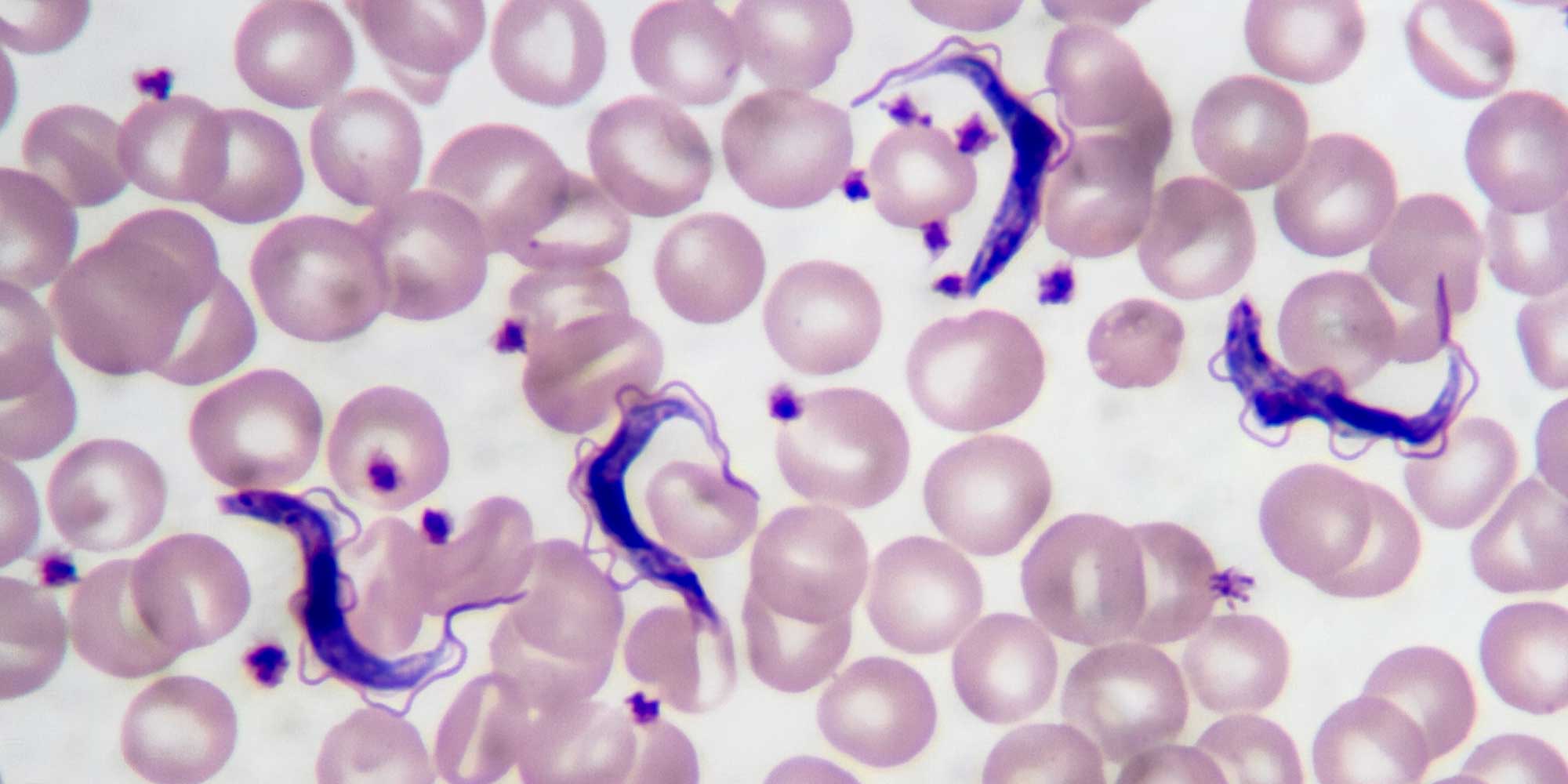
Why Chagas diagnosis matters
Chagas disease is caused by Trypanosoma cruzi, a protozoan parasite mainly transmitted by triatomine insects in endemic areas of Latin America. Infection may also occur through contaminated food, congenital transmission, blood transfusion, organ transplantation, or accidental laboratory exposure.
The disease has an acute phase and a chronic phase. The acute phase is often asymptomatic or mild, while chronic infection may remain silent for decades. However, some patients eventually develop severe cardiac or gastrointestinal complications, including cardiomyopathy, arrhythmias, heart failure, megaoesophagus, or megacolon.
Due to migration from endemic regions, Chagas disease is no longer limited to Latin America. Cases are increasingly detected in non-endemic countries, where infected individuals may require access to blood donation programmes, organ transplantation, pregnancy follow-up, immunosuppressive therapy, or long-term clinical monitoring.
For this reason, reliable serological testing is essential to identify infected patients, prevent transmission, and support clinical follow-up.
Diagnostic methods and challenges in Chagas disease
In acute, congenital, or reactivated Chagas disease, circulating parasites may be detected by direct methods such as microscopy, microhematocrit, Strout concentration, or PCR.
In chronic infection, parasitaemia is usually low and intermittent, so diagnosis relies mainly on serology, preferably using at least two assays based on different methodologies or antigenic compositions.
Chagas serological assays may use recombinant antigens or native antigens, such as whole-parasite antigen or TESA.
Separate IgM testing has limited routine value; therefore, combined IgG+IgM detection is the most practical approach, as it detects the global anti-Trypanosoma cruzi antibody response without overinterpreting isolated IgM reactivity.
Results should always be interpreted together with clinical and epidemiological information.
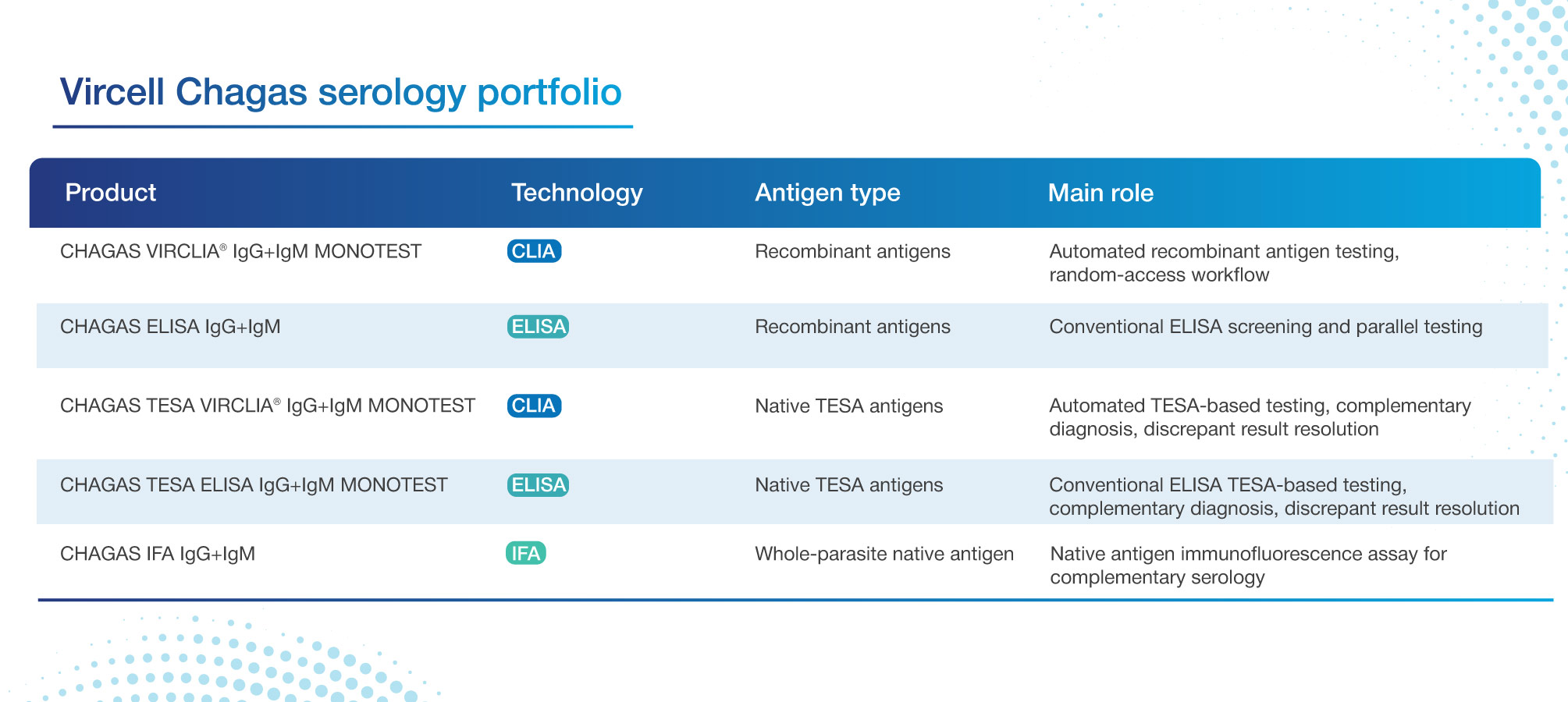
Diagnostic complexity requires complementary serological tools
Laboratory diagnosis of Chagas disease is challenging. No single serological assay is considered a definitive gold standard on its own, due to the genetic diversity of T. cruzi, differences in patient immune response, and possible cross-reactions with other parasites present in endemic areas.
For this reason, international recommendations indicate that diagnosis should be supported by at least two tests using different antigens or different methodologies.
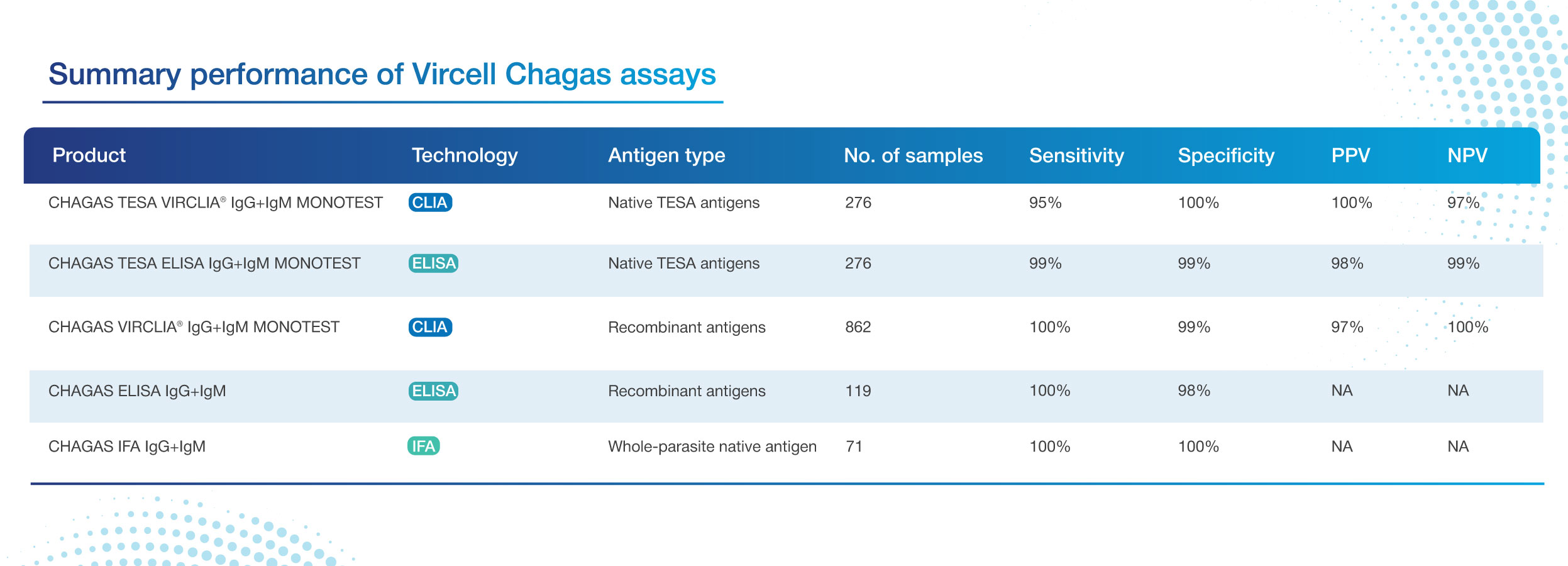
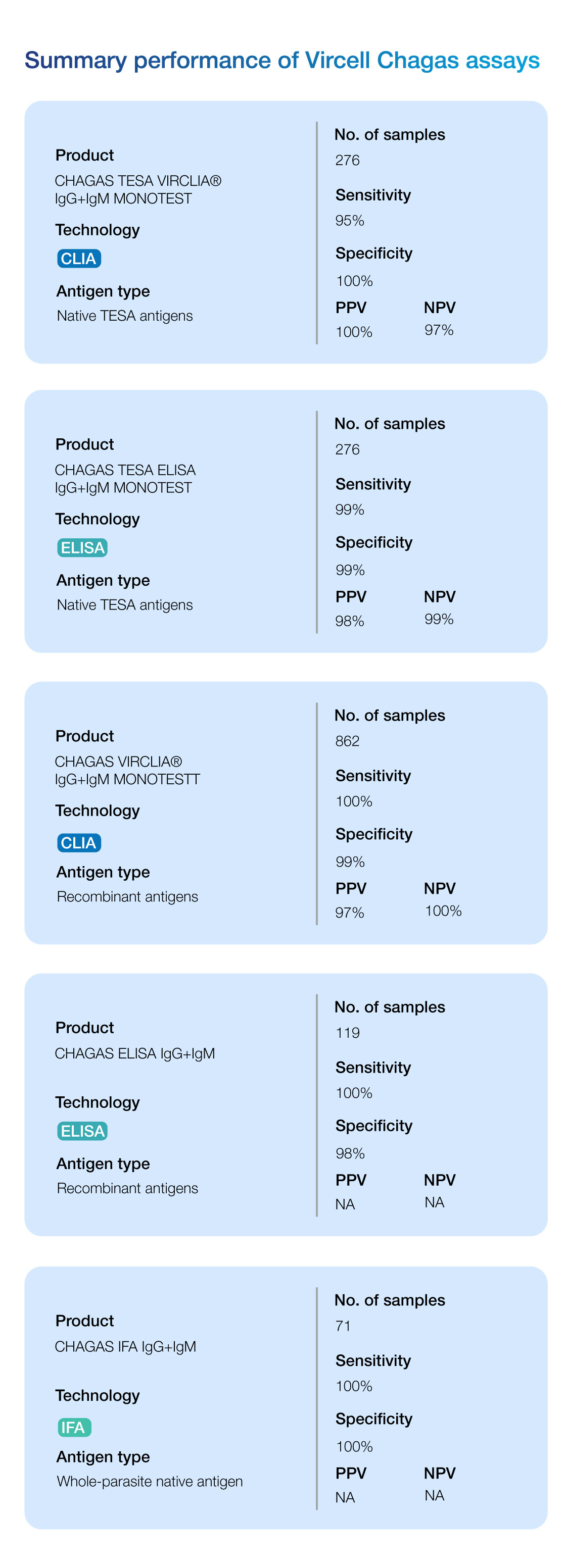
Vircell offers one of the most complete Chagas serology portfolios, combining CLIA, ELISA, and IFA technologies with different antigenic compositions.
This allows laboratories to design flexible diagnostic algorithms adapted to their needs: automated random-access testing, conventional ELISA workflows, native antigen confirmation, parallel testing, or resolution of discrepant results.
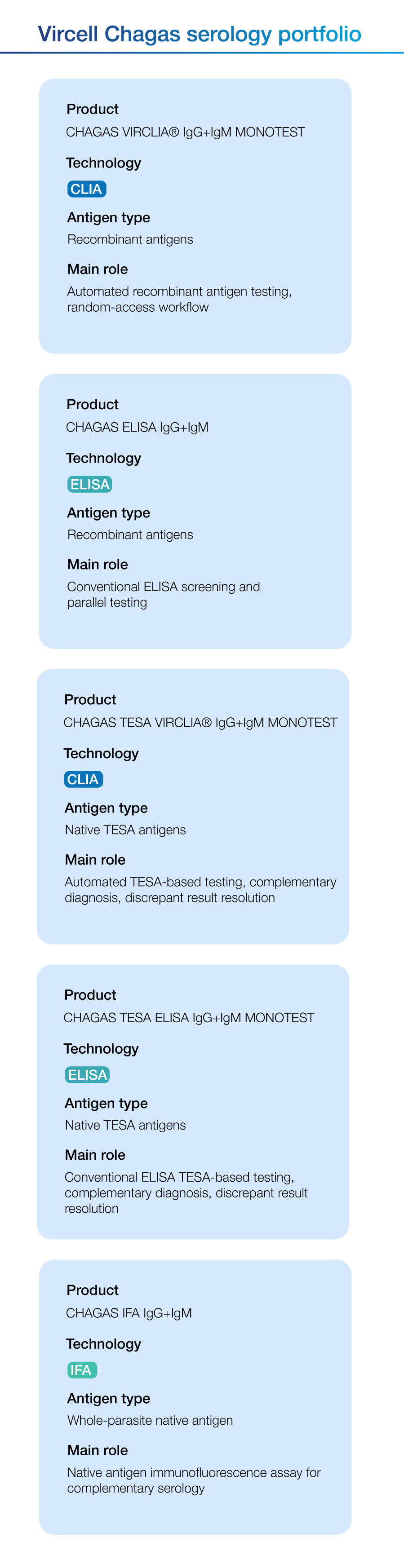
Diagnostic complexity requires complementary serological tools
Laboratory diagnosis of Chagas disease is challenging. No single serological assay is considered a definitive gold standard on its own, due to the genetic diversity of T. cruzi, differences in patient immune response, and possible cross-reactions with other parasites present in endemic areas.
For this reason, international recommendations indicate that diagnosis should be supported by at least two tests using different antigens or different methodologies.
Vircell offers one of the most complete Chagas serology portfolios, combining CLIA, ELISA, and IFA technologies with different antigenic compositions.
This allows laboratories to design flexible diagnostic algorithms adapted to their needs: automated random-access testing, conventional ELISA workflows, native antigen confirmation, parallel testing, or resolution of discrepant results.
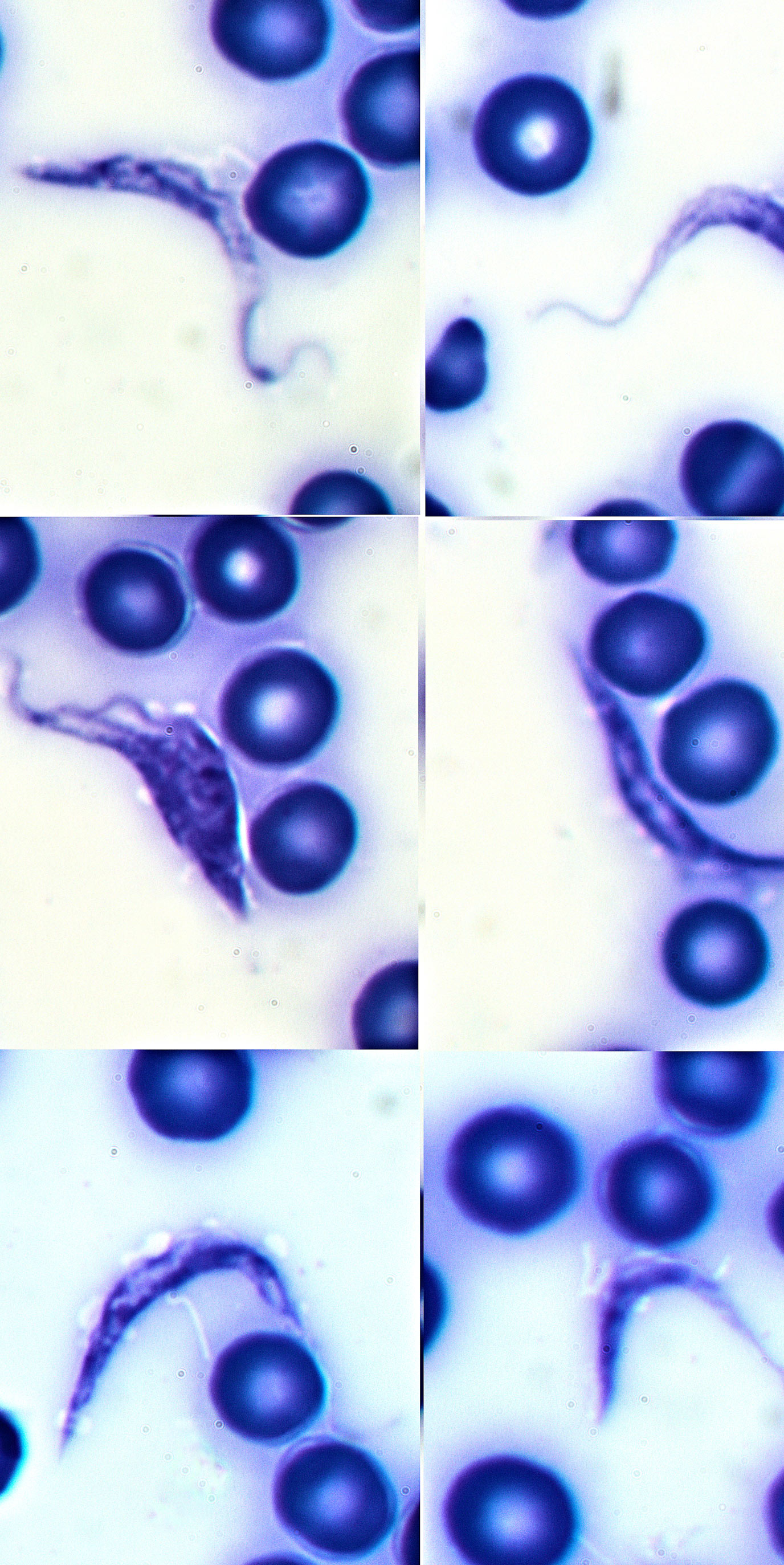
TESA: Native excretory-secretory antigens from Trypanosoma cruzi
TESA means Trypanosoma Excreted-Secreted Antigens. These native, non-structural antigens are released by infective forms of T. cruzi and provide an antigenic profile different from recombinant or whole-parasite antigen assays.
Because TESA antigens are highly immunogenic, they offer a valuable complementary approach for Chagas serology, especially when used alongside recombinant antigen-based tests. An antigenic system previously limited to reference or research laboratories is now available for routine Chagas testing.
Main applications
• Aid to diagnosis of suspected T. cruzi infection.
• Complementary testing together with recombinant antigen assays.
• Support for diagnostic algorithms using different antigenic compositions.
• Resolution of discrepant or inconclusive serological results.
• Follow-up of treated patients, as anti-TESA antibody levels may be associated with treatment response.
CHAGAS VIRCLIA® IgG+IgM MONOTEST and CHAGAS ELISA IgG+IgM
Recombinant antigen-based assays for the detection of antibodies against Trypanosoma cruzi.
The VIRCLIA® format offers automated CLIA testing.
It can be used within the same platform as CHAGAS TESA VIRCLIA® IgG+IgM MONOTEST.
This enables laboratories to combine recombinant antigen and native TESA antigen approaches.
The ELISA format provides a robust solution for:
Conventional batch-based serological workflows
Diagnostic confirmation strategies
CHAGAS IFA IgG+IgM
Whole-parasite native antigen immunofluorescence assay.
CHAGAS IFA IgG+IgM is based on whole-parasite native antigen.
As an immunofluorescence assay, it provides an additional native antigen approach within the Vircell Chagas portfolio.
Bibliography
Evaluation of commercial kits for the immunological and molecular diagnosis of Chagas disease in endemic areas of Venezuela
Ir a enlaceEvaluation of Chagas TESA VirClia assay for chronic Trypanosoma cruzi infection diagnosis and post-treatment follow-up.
Ir a enlace