Why Helicobacter pylori detection matters
Helicobacter pylori is a highly prevalent gastric pathogen able to colonize the human stomach mucosa. Persistent infection with H. pylori is associated with chronic gastritis, gastric and duodenal ulcers, mucosa-associated lymphoid tissue lymphoma and gastric cancer.
Many infections may remain asymptomatic for long periods, while others are linked to dyspepsia, ulcer symptoms and other gastrointestinal manifestations. Since clinical presentation alone is not enough to confirm infection, laboratory testing plays a key role in accurate H. pylori diagnosis and patient management.
Non-invasive testing is central to modern H. pylori diagnostic workflows, especially in patients where endoscopy is not required. Stool antigen detection and serology provide complementary information depending on the clinical question, patient history and testing strategy.


Diagnostic methods for Helicobacter pylori
Diagnosis of H. pylori infection may involve invasive or non-invasive methods.
Invasive methods, such as histology, rapid urease testing, culture or molecular testing, are performed on gastric biopsy samples obtained by endoscopy.
Non-invasive diagnostic methods include:
Urea breath testing
Stool antigen testing
Serology
The Maastricht VI/Florence Consensus Report recognises urea breath testing, stool antigen testing and serology as non-invasive diagnostic options for H. pylori infection, depending on the clinical setting and diagnostic question. The ACG 2024 guideline highlights also emphasise the role of fecal antigen testing, urea breath testing or biopsy-based testing for post-treatment confirmation.
Stool antigen detection is particularly useful because it detects H. pylori antigen in fecal samples and supports assessment of active infection. Serology provides information on the antibody response to H. pylori and can be valuable in complementary diagnostic workflows, especially when interpreted together with symptoms, patient background and other diagnostic procedures.
Diagnostic methods for Helicobacter pylori
Diagnosis of H. pylori infection may involve invasive or non-invasive methods.
Invasive methods, such as histology, rapid urease testing, culture or molecular testing, are performed on gastric biopsy samples obtained by endoscopy.
Non-invasive diagnostic methods include:
Urea breath testing
Stool antigen testing
Serology
The Maastricht VI/Florence Consensus Report recognises urea breath testing, stool antigen testing and serology as non-invasive diagnostic options for H. pylori infection, depending on the clinical setting and diagnostic question. The ACG 2024 guideline highlights also emphasise the role of fecal antigen testing, urea breath testing or biopsy-based testing for post-treatment confirmation.
Stool antigen detection is particularly useful because it detects H. pylori antigen in fecal samples and supports assessment of active infection. Serology provides information on the antibody response to H. pylori and can be valuable in complementary diagnostic workflows, especially when interpreted together with symptoms, patient background and other diagnostic procedures.
Understanding H. pylori diagnostic interpretation
H. pylori diagnosis depends on the clinical question being addressed.
A positive stool antigen result supports the presence of H. pylori antigen in the sample and is aligned with the non-invasive evaluation of current infection. This approach is also relevant when post-treatment confirmation is required, provided that sampling is performed under appropriate conditions.
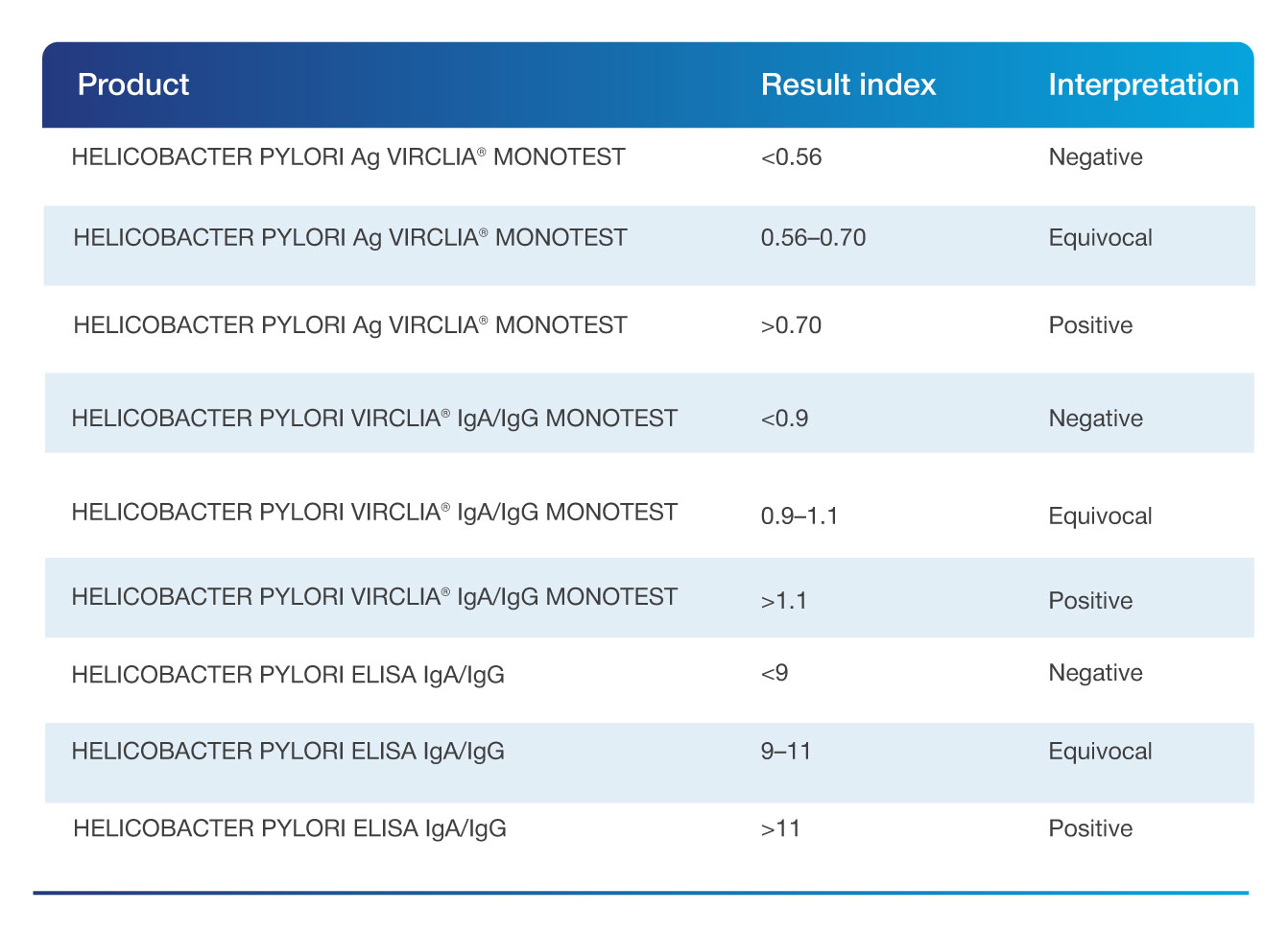
Serological results require a different interpretation. IgG and IgA antibodies indicate an immune response against H. pylori. In untreated symptomatic individuals, positive antibody results may support exposure compatible with infection. However, antibody levels can persist for a long time and should be interpreted within the complete clinical context.
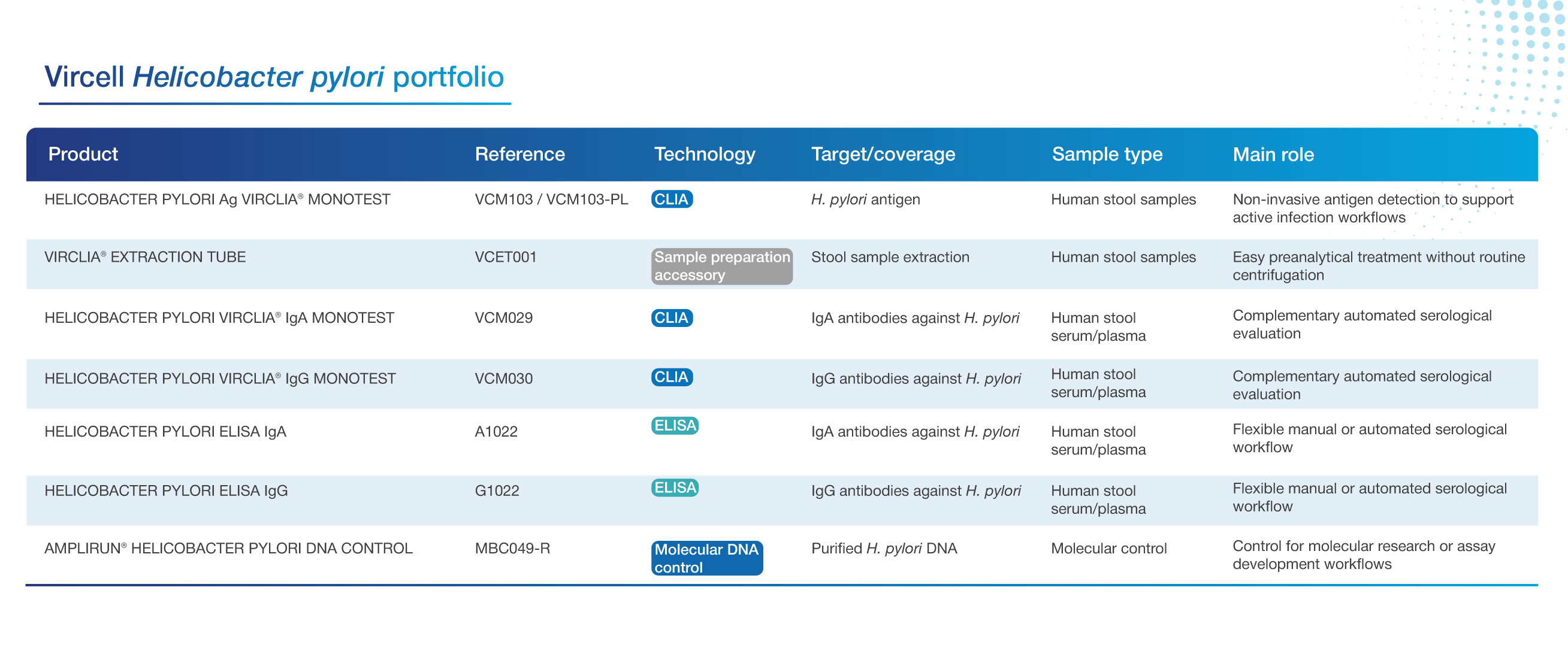
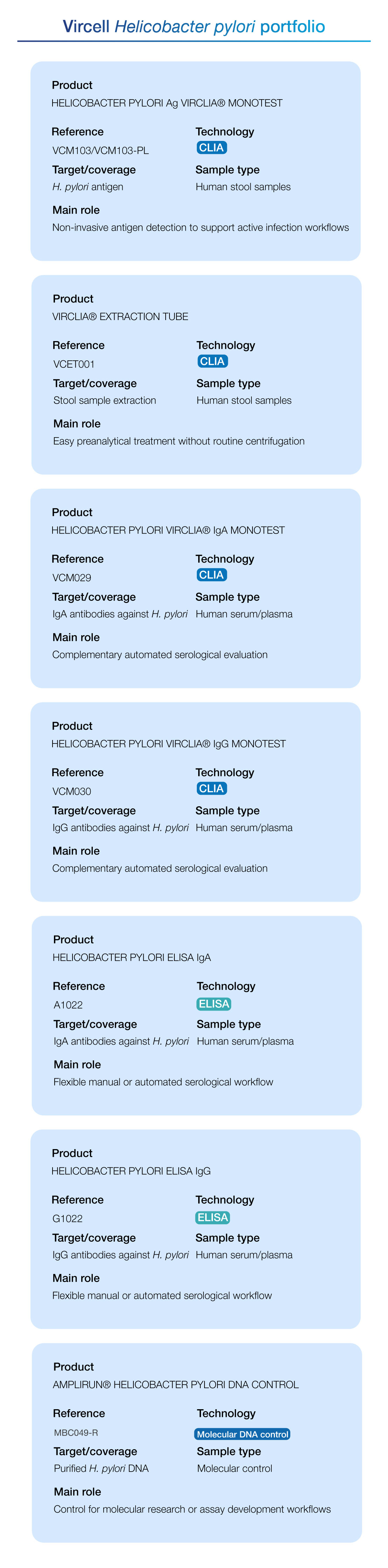
Vircell offers complementary VIRCLIA® solutions for both approaches: stool antigen detection for direct non-invasive testing and IgA/IgG antibody detection for serological evaluation.

HELICOBACTER PYLORI Ag VIRCLIA® MONOTEST
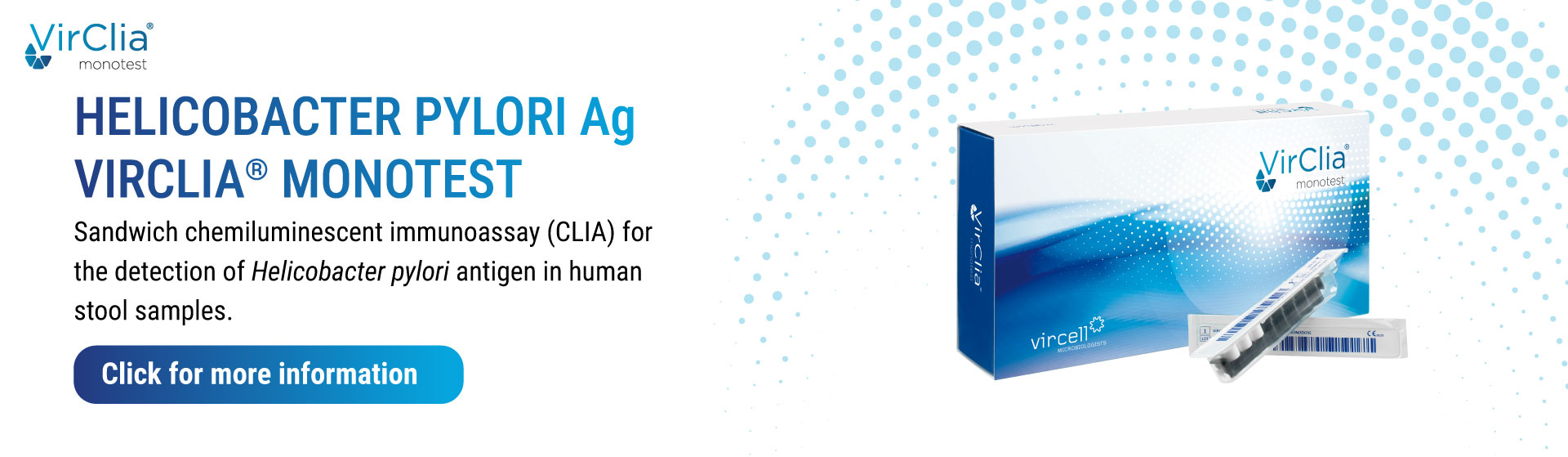
HELICOBACTER PYLORI Ag VIRCLIA® MONOTEST is an automated sandwich chemiluminescent immunoassay for the detection of H. pylori antigen in human stool samples.
The assay is based on antigen capture using monoclonal antibodies and is designed for automated VIRCLIA® workflows. It supports a simple, non-invasive approach for laboratories performing H. pylori stool antigen testing.
The monotest format includes reagents and controls in the strip, supporting on-demand testing and integration within the VIRCLIA® LOTUS system.
Automated H. pylori stool antigen testing, without routine centrifugation
One of the main workflow advantages of HELICOBACTER PYLORI Ag VIRCLIA® MONOTEST is its simplified preanalytical process. When used with VIRCLIA® EXTRACTION TUBE, the assay enables easy stool sample preparation without routine centrifugation in the main workflow.
This helps laboratories reduce manual handling, improve standardisation and integrate H. pylori antigen detection more easily into routine testing.
Key benefits of HELICOBACTER PYLORI Ag VIRCLIA® MONOTEST
Automated CLIA stool antigen detection

Detection of H. pylori antigen in human stool samples through an automated chemiluminescent workflow, supporting a non-invasive approach to active infection assessment.
Monoclonal antibody-based antigen capture
The assay uses monoclonal antibodies for antigen capture, helping support specific detection of H. pylori antigen in stool samples.
Workflow without routine centrifugation
The main sample preparation method avoids routine centrifugation, supporting a cleaner and more efficient preanalytical process.
Results in approximately 1 hour
The automated workflow provides results in approximately one hour, helping laboratories improve turnaround time for H. pylori stool antigen testing.
Monotest format for on-demand testing
The monotest format follows a one sample, one test logic, making it suitable for flexible testing without the need to accumulate samples.
Individual quality control per monotest
Each monotest includes integrated quality control, supporting reliable and traceable testing within routine laboratory workflows.
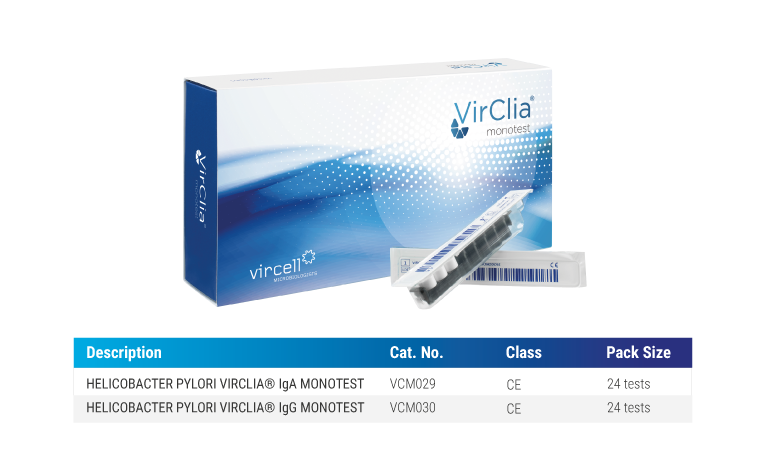
HELICOBACTER PYLORI VIRCLIA® IgA and IgG MONOTEST
HELICOBACTER PYLORI VIRCLIA® includes automated indirect chemiluminescent immunoassays for the qualitative detection of IgA and IgG antibodies against H. pylori in human serum or plasma.
These monotest assays provide complementary serological information and fit routine VIRCLIA® workflows with ready-to-use reagents, integrated calibrator and negative control, and automated processing.
HELICOBACTER PYLORI VIRCLIA® IgA and IgG MONOTEST
HELICOBACTER PYLORI VIRCLIA® includes automated indirect chemiluminescent immunoassays for the qualitative detection of IgA and IgG antibodies against H. pylori in human serum or plasma.
These monotest assays provide complementary serological information and fit routine VIRCLIA® workflows with ready-to-use reagents, integrated calibrator and negative control, and automated processing.
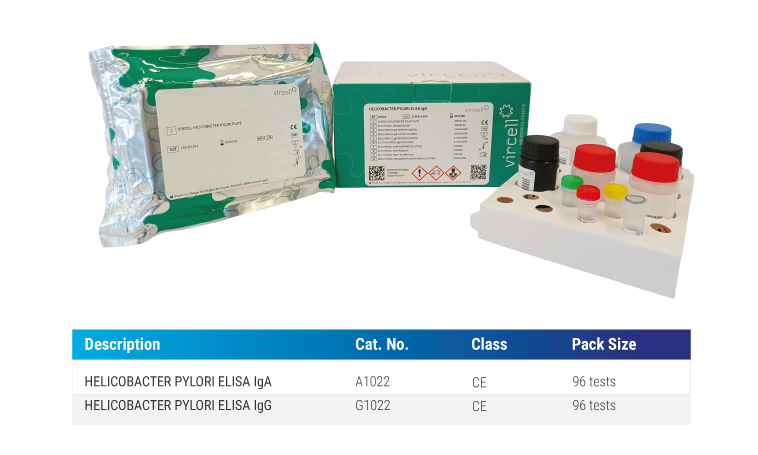
HELICOBACTER PYLORI ELISA IgA and IgG
HELICOBACTER PYLORI ELISA IgA / IgG provides manual or alternatively automated ELISA assays for the qualitative and quantitative detection of antibodies against H. pylori in human serum or plasma.
These assays offer a flexible serological workflow for laboratories using ELISA platforms, supporting complementary evaluation of the antibody response to H. pylori.
Summary performance
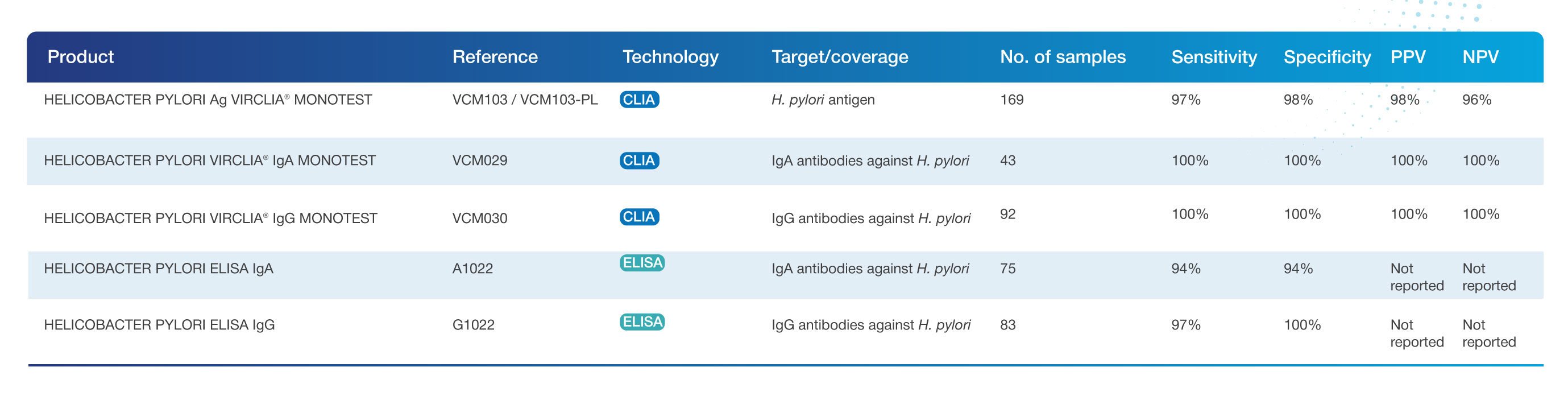
Summary performance
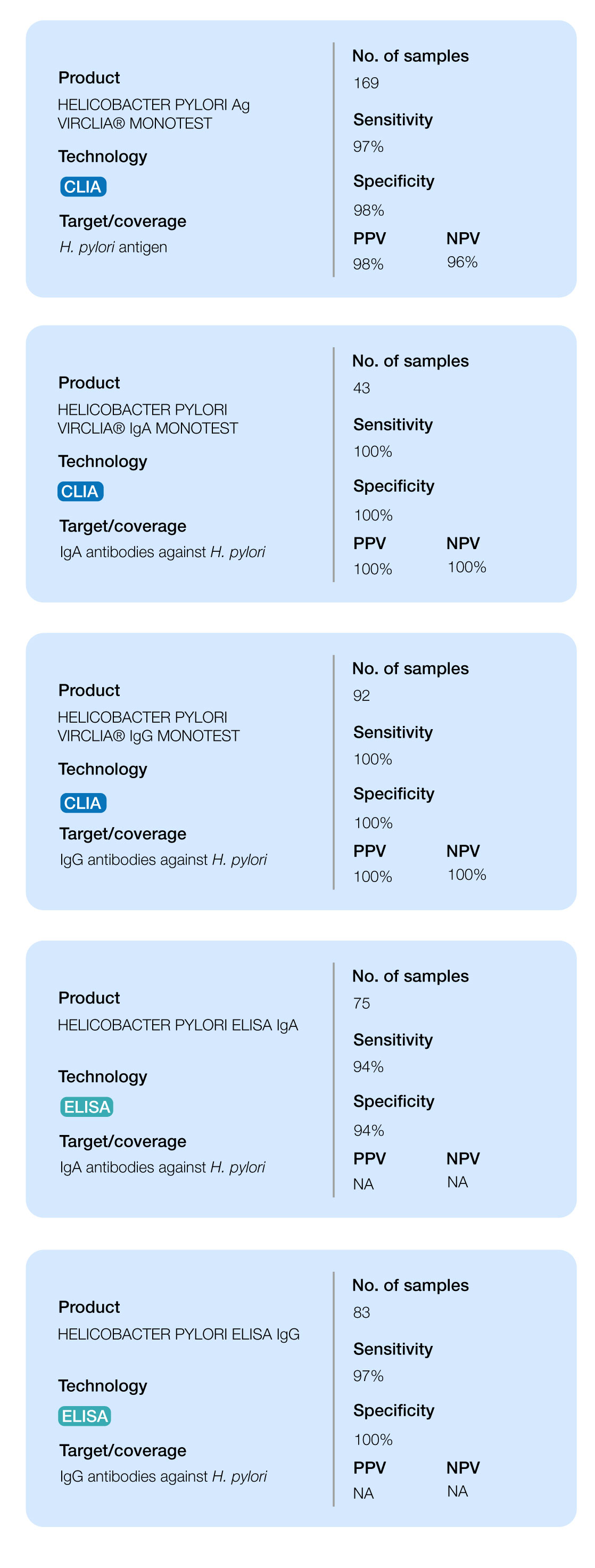
Analytical sensitivity