



Why Aspergillus galactomannan detection matters
Aspergillus species are environmental molds that can cause a wide range of diseases, from allergic and chronic pulmonary conditions to invasive aspergillosis.
Invasive aspergillosis is a severe fungal infection that mainly affects immunocompromised patients, including those with prolonged neutropenia, hematological malignancies, allogeneic stem cell transplantation and other high-risk conditions.
Early diagnostic support is essential because clinical signs are often non-specific and conventional culture methods may have limited sensitivity.
Galactomannan is a cell-wall polysaccharide released during fungal growth. Detecting galactomannan in serum, plasma or bronchoalveolar lavage can support the diagnosis of invasive aspergillosis when results are interpreted together with patient risk factors, imaging findings and other mycological evidence.


Diagnostic methods and challenges in invasive aspergillosis
Diagnosing invasive aspergillosis is complex and usually requires a combination of clinical, radiological and mycological findings. Conventional methods such as culture and microscopy remain important, but culture from bronchoalveolar lavage samples may have limited sensitivity. In addition, results are not always available early enough to support urgent clinical decisions.
The EORTC/MSGERC consensus definitions include galactomannan antigen detection as mycological evidence supporting probable invasive aspergillosis in defined high-risk populations. These criteria combine host factors, clinical features and mycological evidence, including galactomannan detection in serum, plasma, bronchoalveolar lavage or cerebrospinal fluid.
The EORTC/MSGERC galactomannan threshold update also highlights the importance of standardized result interpretation according to sample type and clinical context.
For routine clinical laboratories, automated galactomannan detection helps streamline diagnostic workflows, especially when urgent individual samples need to be processed without waiting for batch accumulation.
Diagnostic methods and challenges in invasive aspergillosis
Diagnosing invasive aspergillosis is complex and usually requires a combination of clinical, radiological and mycological findings. Conventional methods such as culture and microscopy remain important, but culture from bronchoalveolar lavage samples may have limited sensitivity. In addition, results are not always available early enough to support urgent clinical decisions.
The EORTC/MSGERC consensus definitions include galactomannan antigen detection as mycological evidence supporting probable invasive aspergillosis in defined high-risk populations. These criteria combine host factors, clinical features and mycological evidence, including galactomannan detection in serum, plasma, bronchoalveolar lavage or cerebrospinal fluid.
The EORTC/MSGERC galactomannan threshold update also highlights the importance of standardized result interpretation according to sample type and clinical context.
For routine clinical laboratories, automated galactomannan detection helps streamline diagnostic workflows, especially when urgent individual samples need to be processed without waiting for batch accumulation.
Diagnostic complexity of galactomannan interpretation
Galactomannan is a useful biomarker, but it is not a stand-alone diagnosis. A positive result indicates detection of galactomannan antigen. It does not confirm direct visualization or isolation of viable Aspergillus.
Interpretation may vary depending on sample type, patient population and exposure to antifungal treatment. Serum and plasma testing are particularly relevant in high-risk hematology and transplant-related workflows, while bronchoalveolar lavage testing can support the assessment of pulmonary disease, especially when lower respiratory tract involvement is suspected.
False-positive and false-negative results may occur. For this reason, galactomannan results should always be interpreted together with clinical suspicion, host factors, CT findings, microbiology, histology and other fungal biomarkers when available.

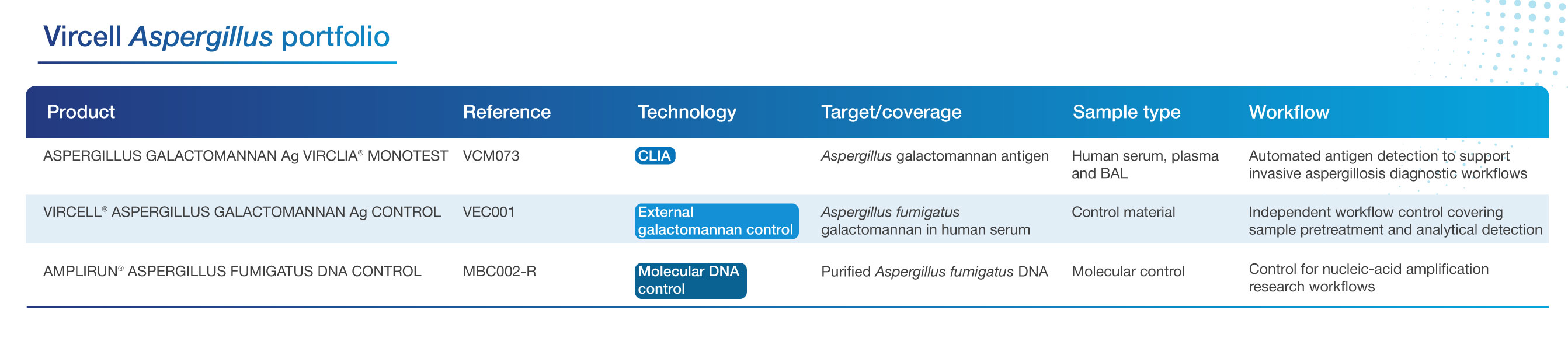
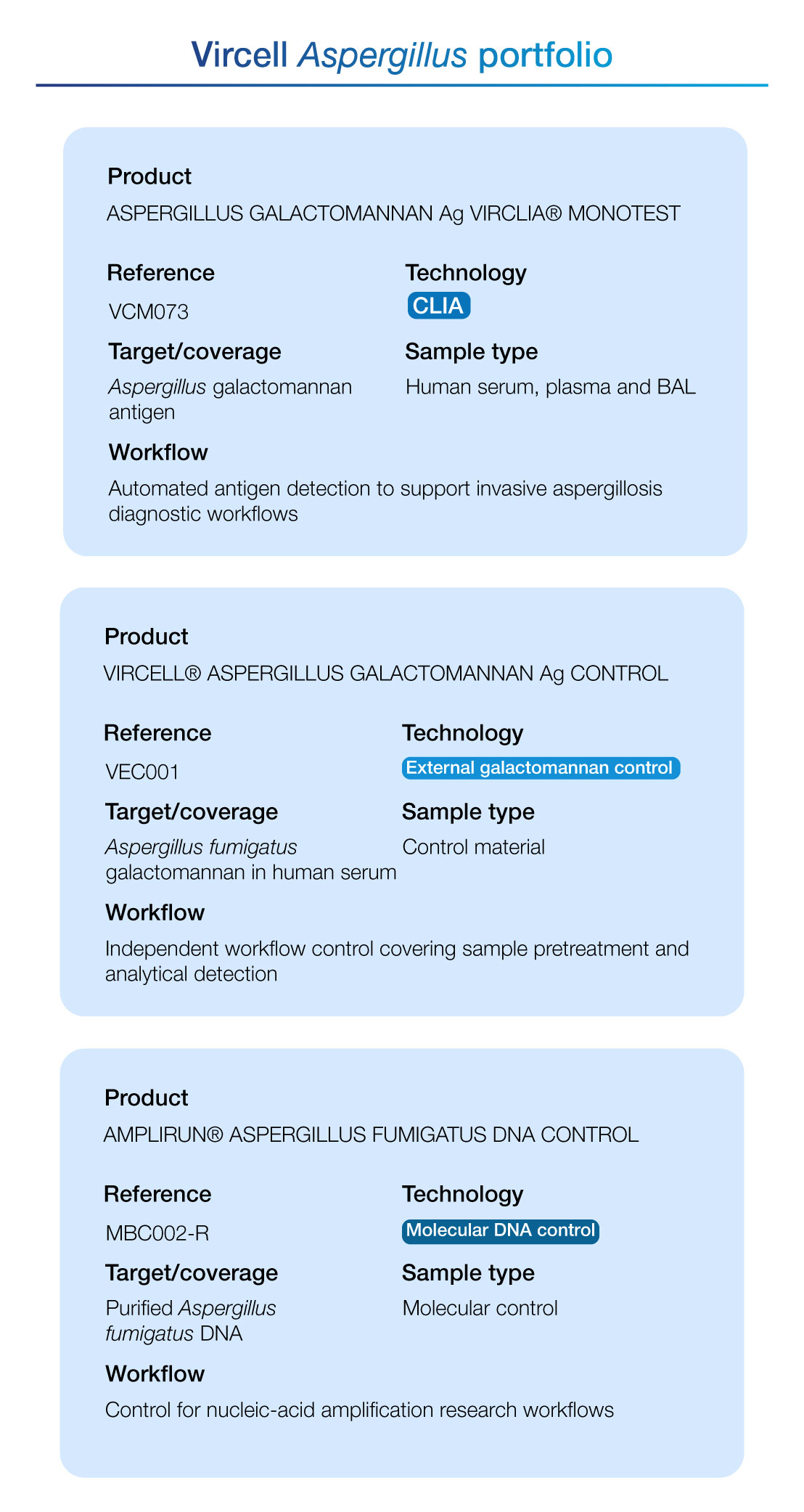
ASPERGILLUS GALACTOMANNAN Ag VIRCLIA® MONOTEST
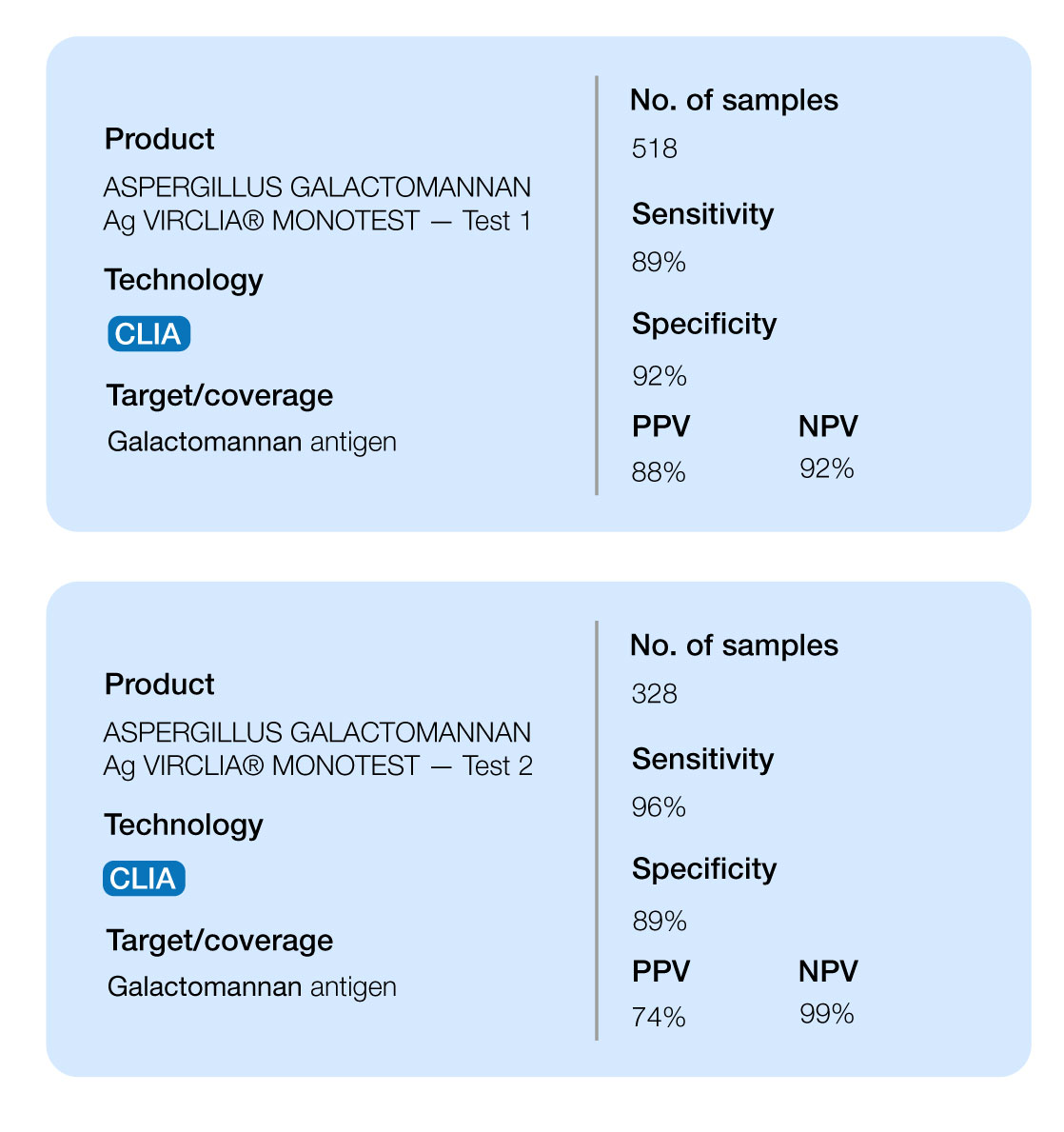
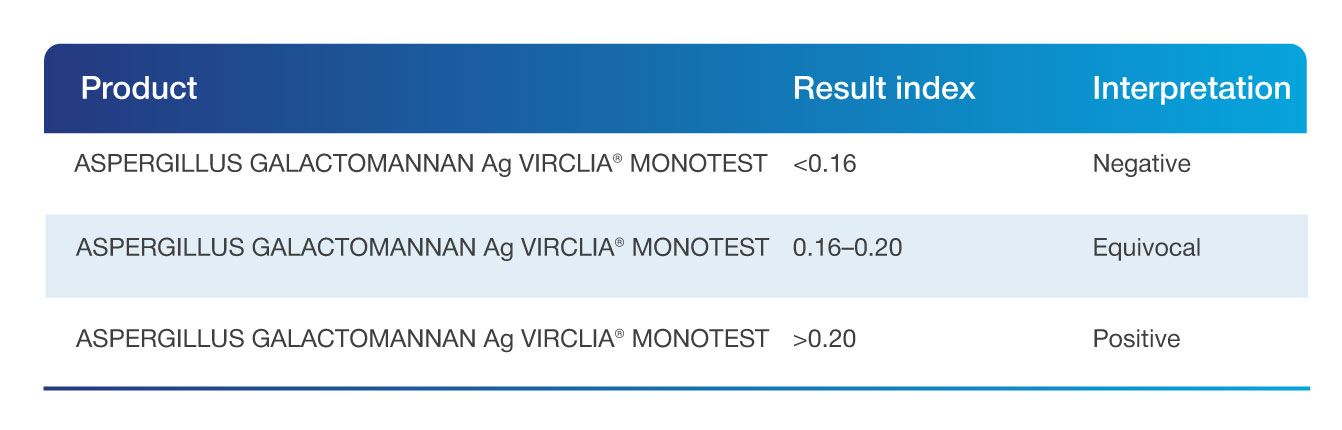
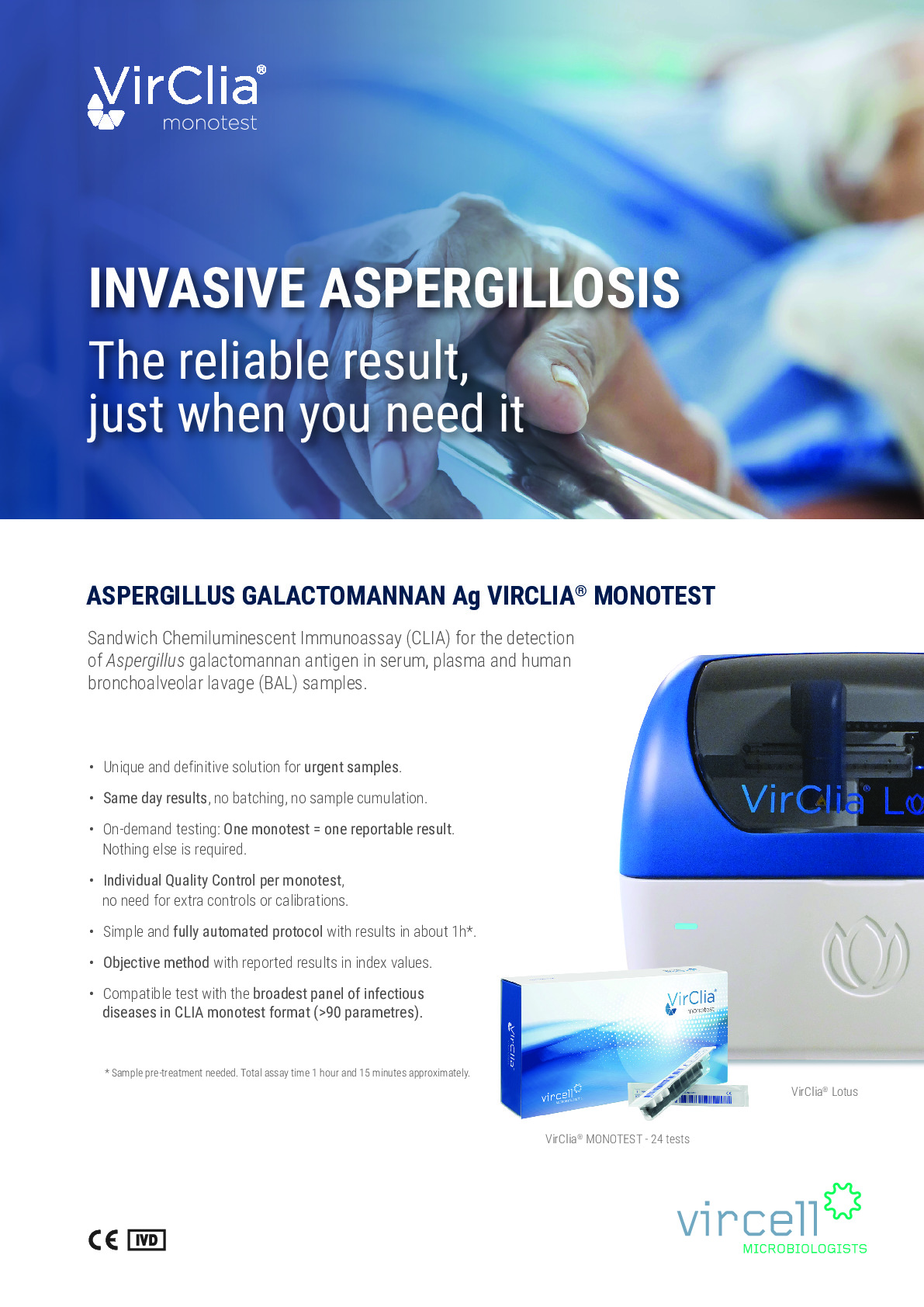
ASPERGILLUS GALACTOMANNAN Ag VIRCLIA® MONOTEST is an automated sandwich chemiluminescent immunoassay for the qualitative detection of Aspergillus galactomannan antigen in human serum, plasma and bronchoalveolar lavage samples.
Its monotest format supports individual, on-demand testing, allowing laboratories to process urgent samples without waiting for batch accumulation.
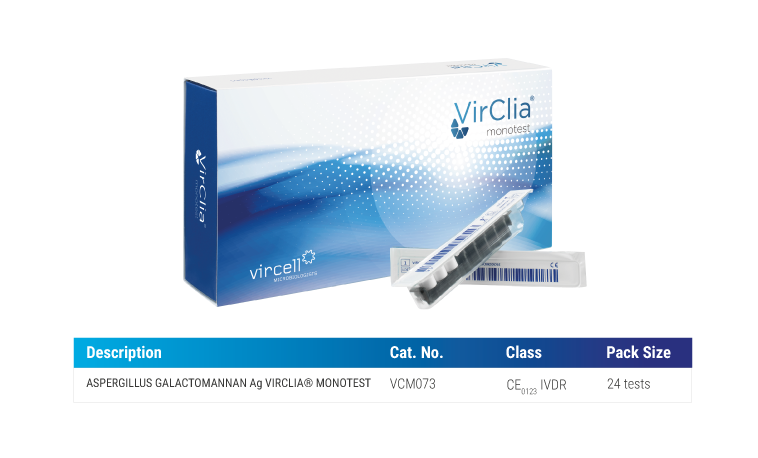
Key benefits of ASPERGILLUS GALACTOMANNAN Ag VIRCLIA® MONOTEST
Automated CLIA detection

Automated chemiluminescent technology helps standardize galactomannan antigen detection and reduce manual handling in routine laboratories.
On-demand testing
Process individual samples whenever needed, without waiting for batch accumulation. Ideal for urgent Aspergillus galactomannan testing workflows.
Compatible with serum, plasma and BAL samples
Validated for human serum, plasma and bronchoalveolar lavage samples, supporting flexible diagnostic workflows for invasive aspergillosis.
Results in approximately 1 hour
Fast turnaround time helps laboratories provide timely diagnostic support when invasive aspergillosis is suspected.
Ready-to-use monotest format
Each monodose includes ready-to-use reagents, calibrator and negative control, simplifying workflow and supporting reliable individual results.
Compatible with VIRCLIA® automation
Designed for use with VIRCLIA® automated processors and VirCom® LIS middleware, supporting efficient integration into laboratory workflows.
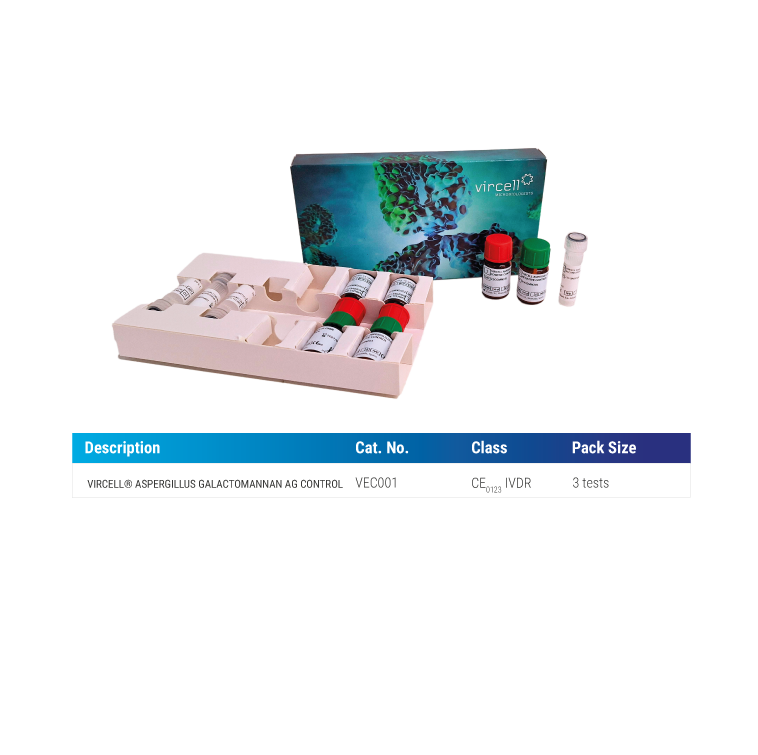
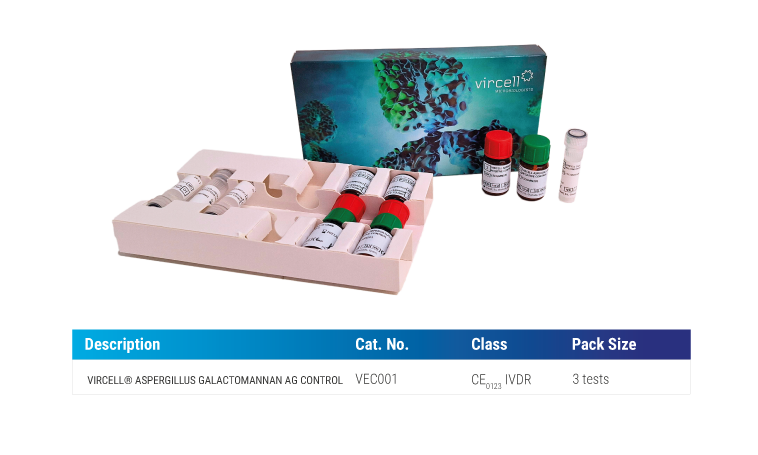
VIRCELL® ASPERGILLUS GALACTOMANNAN Ag CONTROL
VIRCELL® ASPERGILLUS GALACTOMANNAN Ag CONTROL is an external control containing Aspergillus fumigatus galactomannan in human serum.
It is designed to monitor both sample pretreatment and analytical detection phases in galactomannan antigen workflows. The control is processed in the same way as clinical samples, including heating and centrifugation, helping laboratories evaluate the complete workflow.
Main features
Independent external control.
Covers sample pretreatment and analytical detection.
Compatible with galactomannan detection platforms.
Useful for routine quality control, verification and troubleshooting.
Supports consistency across instruments, operators and reagent lots.
VIRCELL® ASPERGILLUS GALACTOMANNAN Ag CONTROL
VIRCELL® ASPERGILLUS GALACTOMANNAN Ag CONTROL is an external control containing Aspergillus fumigatus galactomannan in human serum.
It is designed to monitor both sample pretreatment and analytical detection phases in galactomannan antigen workflows. The control is processed in the same way as clinical samples, including heating and centrifugation, helping laboratories evaluate the complete workflow.
Main features
Independent external control.
Covers sample pretreatment and analytical detection.
Compatible with galactomannan detection platforms.
Useful for routine quality control, verification and troubleshooting.
Supports consistency across instruments, operators and reagent lots.
Summary performance

Summary performance
Analytical sensitivity
More resources
Bibliography
Comparison of the performance of two galactomannan detection tests: Platelia Aspergillus Ag and Aspergillus galactomannan Ag VirClia Monotest
Ir a enlaceRetrospective Multicenter Evaluation of the VirClia Galactomannan Antigen Assay for the Diagnosis of Pulmonary Aspergillosis with Bronchoalveolar Lavage Fluid Samples from Patients with Hematological Disease
Ir a enlaceComparative performance of the Platelia Aspergillus Antigen and Aspergillus galactomannan antigen VirClia Monotest immunoassays in serum and lower respiratory tract specimens: a “real-life” experience
Ir a enlaceThe Aspergillus galactomannan Ag VIRCLIA® Monotest and the sõna Aspergillus galactomannan lateral flow assay show comparable performance for the diagnosis of invasive aspergillosis
Ir a enlaceDiagnostic Value of Serum Biomarkers for Invasive Aspergillosis in Haematologic Patients
Ir a enlaceSerum antigen tests for the diagnosis of invasive aspergillosis: a retrospective comparison of five Aspergillus antigen assays and one beta-D-glucan assay
Ir a enlaceMulticenter validation of a galactomannan chemiluminescence immunoassay for the diagnosis of pulmonary aspergillosis on serum of patients with hematological disease
Ir a enlacePromotional material
Need support with invasive aspergillosis diagnostic workflows?
Vircell provides automated galactomannan antigen detection and independent external quality control solutions to support reliable, on-demand Aspergillus diagnostic workflows in clinical laboratories.