Why Brucella diagnosis matters
Human brucellosis is a major zoonotic infectious disease, still highly relevant in endemic regions and also present in low-prevalence countries through migration, travel or occupational exposure.
The disease is mainly caused by Brucella melitensis, B. abortus, B. suis and B. canis. B. melitensis is especially important in humans and is associated with a higher risk of chronic or complicated brucellosis when diagnosis and treatment are delayed.
Transmission may occur through unpasteurized dairy products, contact with infected animals or tissues, skin or mucosal inoculation, or inhalation of contaminated aerosols. Brucellosis may present with fever, sweats, fatigue, arthralgia, myalgia, headache or hepatosplenomegaly, and may progress to focal complications such as osteoarticular disease, epididymo-orchitis, neurobrucellosis, abscesses or endocarditis.
Because symptoms are often non-specific and the disease may progress to chronic or complicated forms, laboratory testing is essential to support diagnosis, follow-up and patient management.


Diagnostic methods and challenges in human brucellosis
The diagnosis of human brucellosis should combine clinical suspicion, exposure history and laboratory testing. Culture can provide direct confirmation, while molecular methods such as PCR may support rapid detection when available.
However, in routine practice, brucellosis serology remains central, especially when direct detection is not feasible or when the disease has already evolved.
The serological response changes with the stage of disease. In acute primary infection, IgM usually appears first, followed by agglutinating IgG and IgA antibodies. Rose Bengal, agglutination tests, ELISA and automated CLIA assays can provide useful diagnostic support in this phase.
In chronic brucellosis, relapse, reinfection or endemic settings, non-agglutinating IgG and IgA antibodies may predominate and can be missed by conventional agglutination methods. BRUCELLACAPT® is therefore especially useful for evolved disease, relapse investigation, treatment follow-up and confirmation.
Interpretation can be challenging because early samples may be negative, IgM may persist, and serology may not distinguish active disease from past exposure. Results should always be assessed together with clinical, epidemiological and complementary diagnostic information.
Diagnostic methods and challenges in human brucellosis
The diagnosis of human brucellosis should combine clinical suspicion, exposure history and laboratory testing. Culture can provide direct confirmation, while molecular methods such as PCR may support rapid detection when available.
However, in routine practice, brucellosis serology remains central, especially when direct detection is not feasible or when the disease has already evolved.
The serological response changes with the stage of disease. In acute primary infection, IgM usually appears first, followed by agglutinating IgG and IgA antibodies. Rose Bengal, agglutination tests, ELISA and automated CLIA assays can provide useful diagnostic support in this phase.
In chronic brucellosis, relapse, reinfection or endemic settings, non-agglutinating IgG and IgA antibodies may predominate and can be missed by conventional agglutination methods. BRUCELLACAPT® is therefore especially useful for evolved disease, relapse investigation, treatment follow-up and confirmation.
Interpretation can be challenging because early samples may be negative, IgM may persist, and serology may not distinguish active disease from past exposure. Results should always be assessed together with clinical, epidemiological and complementary diagnostic information.
Vircell Brucella portfolio
Complete diagnostic flexibility from screening to follow-up
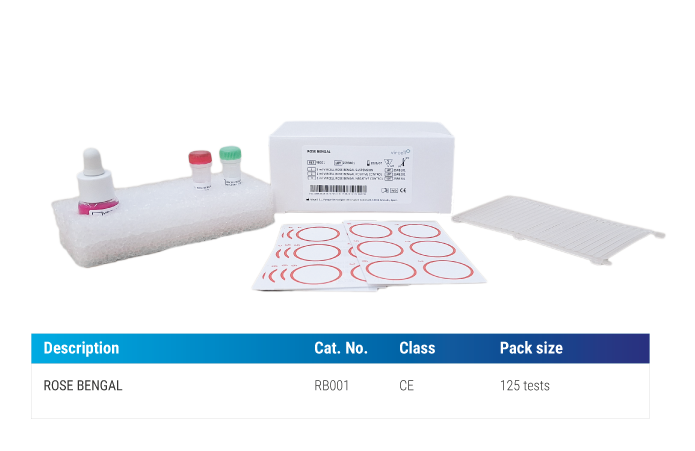
ROSE BENGAL
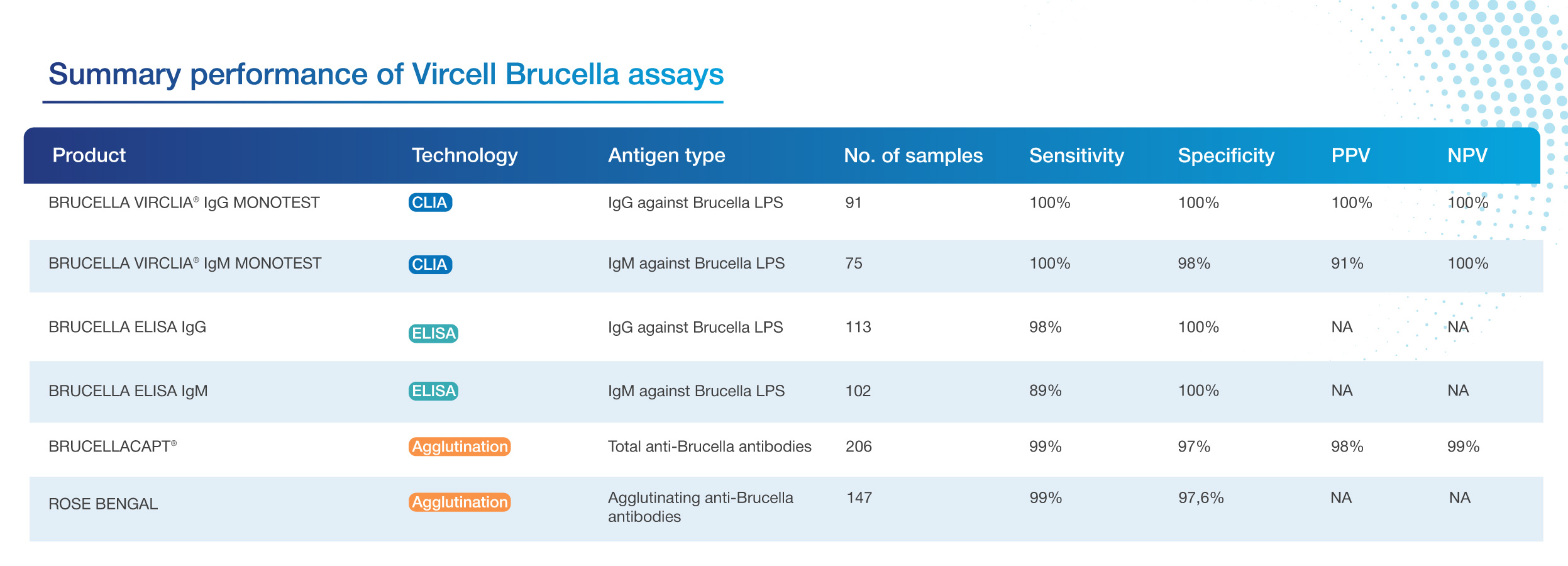
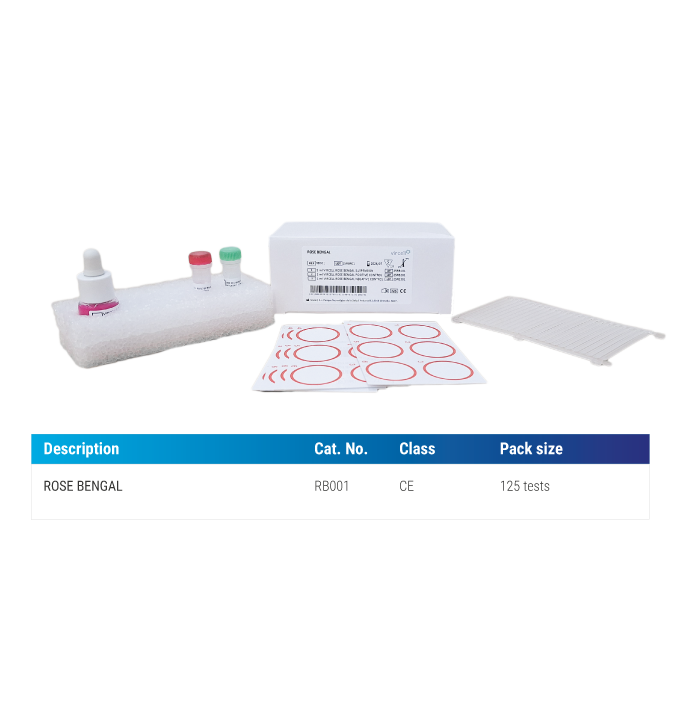
ROSE BENGAL is a rapid card agglutination assay for the detection of agglutinating anti-Brucella antibodies in human serum. It provides immediate diagnostic orientation and is useful as a first-line screening tool before confirmation with additional serological methods.
Key benefits
Rapid and simple screening assay
Immediate visual results
Useful for initial diagnostic orientation
Ready-to-use reagents
No sample predilution required
Antigen supplied in dropper format
125-test presentation
ROSE BENGAL should not be used as the only diagnostic method. Positive or clinically suspicious results should be confirmed with additional brucellosis serological assays such as BRUCELLACAPT®, ELISA or VIRCLIA®.
ROSE BENGAL
ROSE BENGAL is a rapid card agglutination assay for the detection of agglutinating anti-Brucella antibodies in human serum. It provides immediate diagnostic orientation and is useful as a first-line screening tool before confirmation with additional serological methods.
Key benefits
Rapid and simple screening assay
Immediate visual results
Useful for initial diagnostic orientation
Ready-to-use reagents
No sample predilution required
Antigen supplied in dropper format
125-test presentation
ROSE BENGAL should not be used as the only diagnostic method. Positive or clinically suspicious results should be confirmed with additional brucellosis serological assays such as BRUCELLACAPT®, ELISA or VIRCLIA®.
BRUCELLA ELISA IgG and IgM
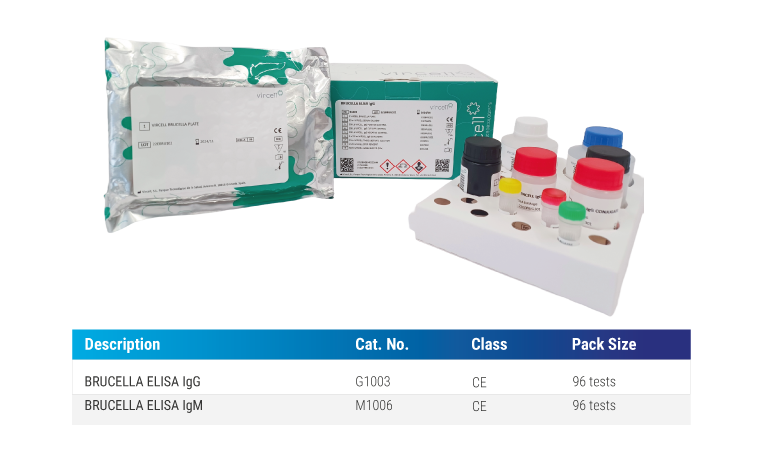
BRUCELLA ELISA IgG and BRUCELLA ELISA IgM are routine ELISA assays for the qualitative detection of IgG or IgM antibodies against Brucella in human serum or plasma.
This format is suitable for laboratories processing multiple samples and supports conventional batch-based brucellosis serology.
Key benefits
Conventional ELISA workflow
IgG and IgM assay options
Suitable for routine batch processing
Manual or automated ELISA processing
No sample predilution required
BRUCELLA ELISA IgG and IgM
BRUCELLA ELISA IgG and BRUCELLA ELISA IgM are routine ELISA assays for the qualitative detection of IgG or IgM antibodies against Brucella in human serum or plasma.
This format is suitable for laboratories processing multiple samples and supports conventional batch-based brucellosis serology.
Key benefits
Conventional ELISA workflow
IgG and IgM assay options
Suitable for routine batch processing
Manual or automated ELISA processing
No sample predilution required
BRUCELLACAPT®
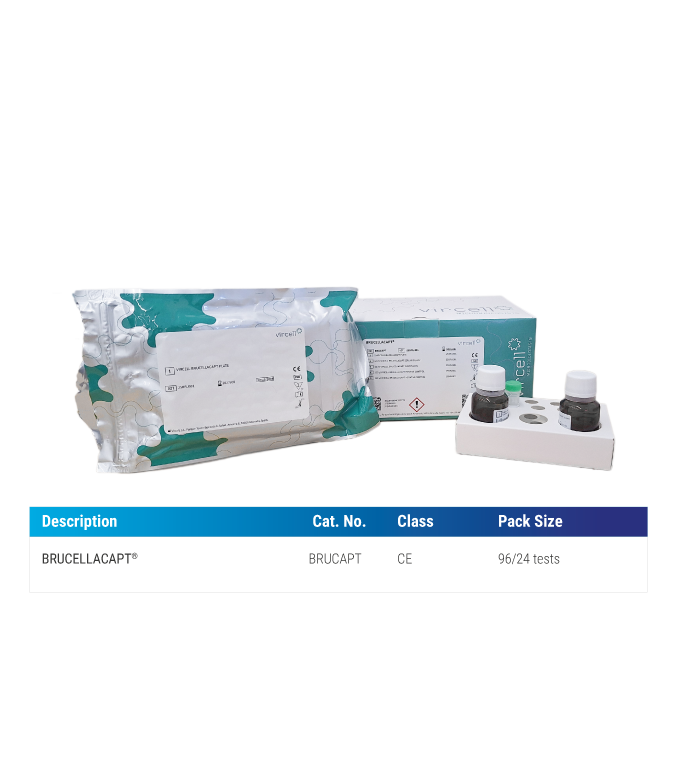
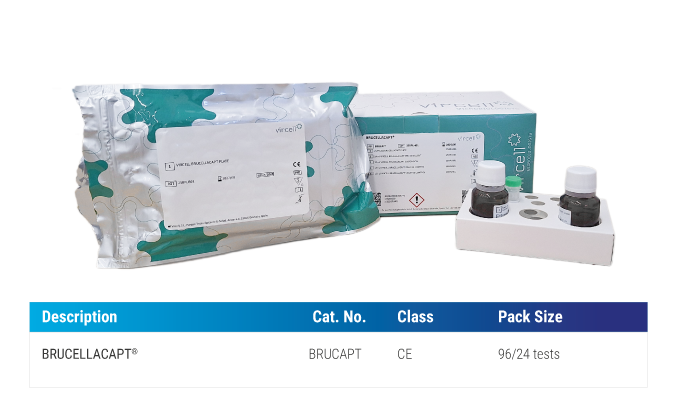
BRUCELLACAPT® is a single-step immunocapture-agglutination assay for the detection of total anti-Brucella antibodies in human serum or plasma.
Based on the Coombs test principle, it detects both agglutinating antibodies and non-agglutinating IgG/IgA antibodies that may be missed by conventional agglutination methods.
This makes BRUCELLACAPT® especially useful in chronic or evolved brucellosis, relapse investigation, treatment follow-up and confirmation, particularly when conventional serology is insufficient.
Key benefits
Detects agglutinating and non-agglutinating antibodies
Useful for chronic disease, relapse, follow-up and confirmation
Easier and more practical than classical Coombs testing
Single-step method with no washing required
Visual or automated reading
Results in 24 hours
Can be used for screening or titration
Strong recognition in international scientific literature
BRUCELLACAPT®
BRUCELLACAPT® is a single-step immunocapture-agglutination assay for the detection of total anti-Brucella antibodies in human serum or plasma.
Based on the Coombs test principle, it detects both agglutinating antibodies and non-agglutinating IgG/IgA antibodies that may be missed by conventional agglutination methods.
This makes BRUCELLACAPT® especially useful in chronic or evolved brucellosis, relapse investigation, treatment follow-up and confirmation, particularly when conventional serology is insufficient.
Key benefits
Detects agglutinating and non-agglutinating antibodies
Useful for chronic disease, relapse, follow-up and confirmation
Easier and more practical than classical Coombs testing
Single-step method with no washing required
Visual or automated reading
Results in 24 hours
Can be used for screening or titration
Strong recognition in international scientific literature
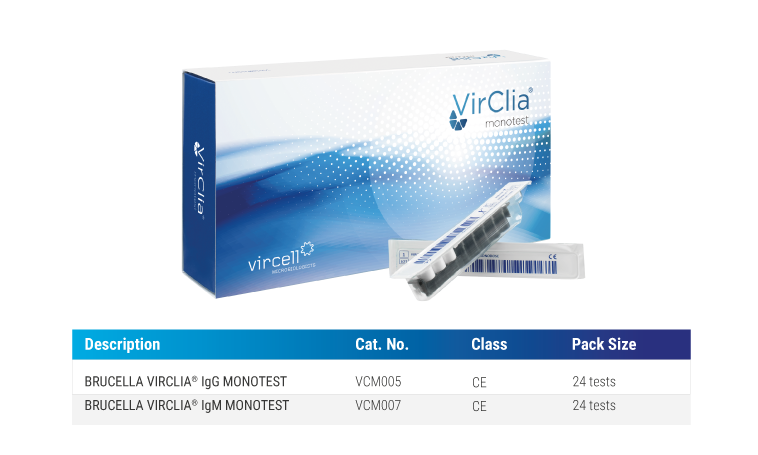
BRUCELLA VIRCLIA® IgG MONOTEST and BRUCELLA VIRCLIA® IgM MONOTEST
Automated CLIA assays for the qualitative detection of IgG or IgM antibodies against Brucella in human serum or plasma. The MONOTEST format supports individual, on-demand testing for laboratories requiring fast and flexible Brucella serology without batch accumulation.
Key benefits
Automated CLIA workflow
IgG and IgM assay options
MONOTEST format for individual samples
Suitable for urgent, low-volume or random-access testing
Internal validation of each monodose
Objective result interpretation
BRUCELLA VIRCLIA® IgG MONOTEST and BRUCELLA VIRCLIA® IgM MONOTEST
Automated CLIA assays for the qualitative detection of IgG or IgM antibodies against Brucella in human serum or plasma. The MONOTEST format supports individual, on-demand testing for laboratories requiring fast and flexible Brucella serology without batch accumulation.
Key benefits
Automated CLIA workflow
IgG and IgM assay options
MONOTEST format for individual samples
Suitable for urgent, low-volume or random-access testing
Internal validation of each monodose
Objective result interpretation