



Why Hepatitis Delta virus detection matters
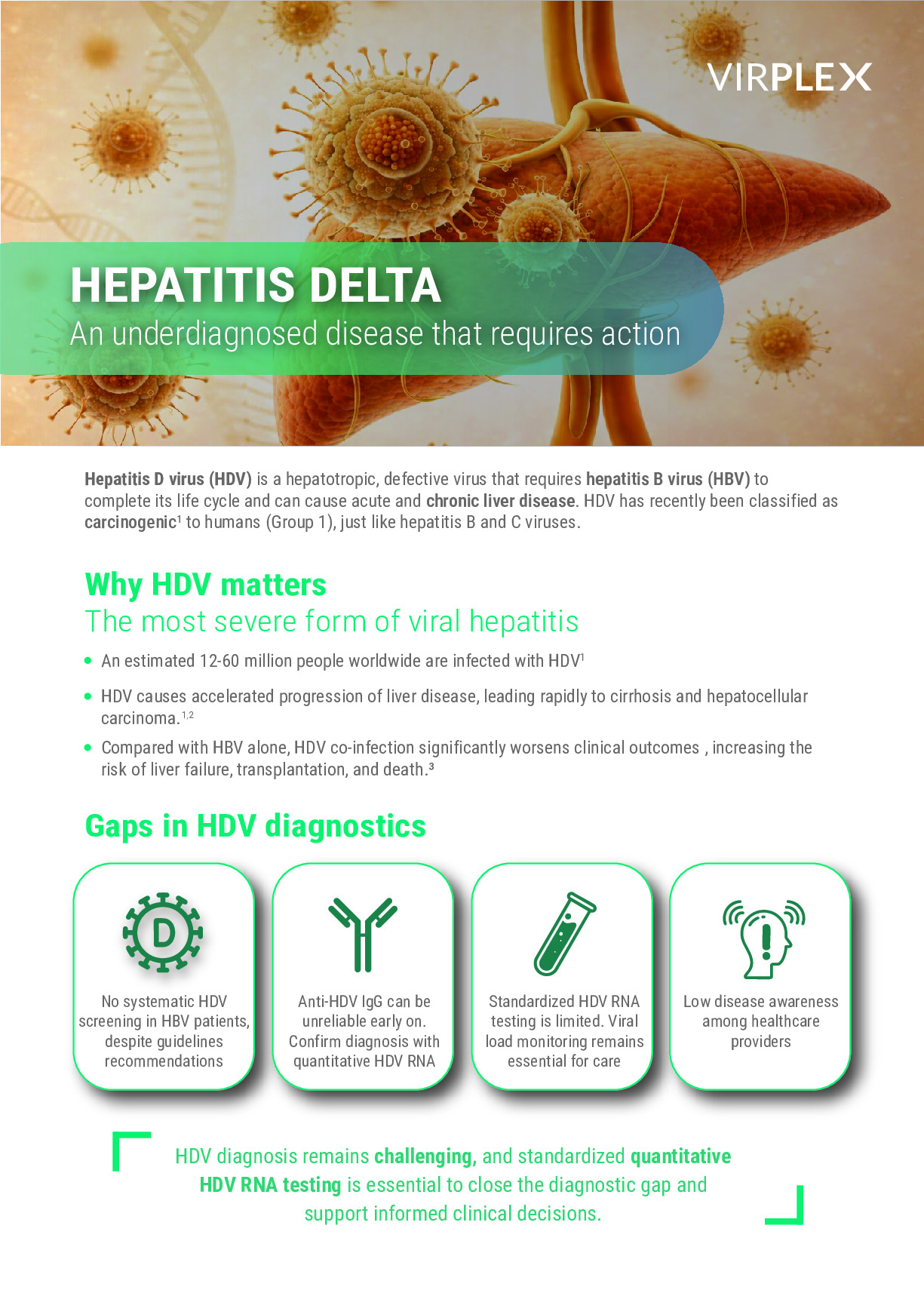
Hepatitis Delta virus or HDV is a defective RNA virus that requires hepatitis B virus or HBV to complete its life cycle. HDV infection can occur as simultaneous HBV/HDV coinfection or as HDV superinfection in individuals with chronic HBV infection.
Hepatitis Delta is considered one of the most severe forms of viral hepatitis. Chronic infection is associated with faster progression of liver disease and a higher risk of cirrhosis, hepatic decompensation and hepatocellular carcinoma.
Because HDV infection can only occur in the presence of HBV, diagnostic workflows usually begin in HBsAg-positive individuals. Once exposure is suspected or anti-HDV antibodies are detected, HDV RNA testing is essential to confirm active viral replication and support HDV viral load monitoring.


Diagnostic methods and challenges in Hepatitis Delta
The diagnosis of Hepatitis Delta requires a stepwise approach. International guidelines recommend screening HBsAg-positive individuals for anti-HDV antibodies and confirming active infection with HDV RNA testing in anti-HDV-positive patients.
The EASL Clinical Practice Guidelines on Hepatitis Delta virus recommend testing HDV RNA in all anti-HDV-positive individuals using a standardized and sensitive reverse-transcription PCR assay to diagnose active HDV infection. These guidelines also highlight that HDV RNA results should be reported in IU/mL to improve comparability across laboratory systems.
HDV RNA testing is also relevant for monitoring viral replication during follow-up and treatment-related workflows. Because HDV RNA levels may fluctuate, sequential monitoring should preferably be performed using the same assay and laboratory to reduce inter-assay and inter-laboratory variability.
Diagnostic methods and challenges in Hepatitis Delta
The diagnosis of Hepatitis Delta requires a stepwise approach. International guidelines recommend screening HBsAg-positive individuals for anti-HDV antibodies and confirming active infection with HDV RNA testing in anti-HDV-positive patients.
The EASL Clinical Practice Guidelines on Hepatitis Delta virus recommend testing HDV RNA in all anti-HDV-positive individuals using a standardized and sensitive reverse-transcription PCR assay to diagnose active HDV infection. These guidelines also highlight that HDV RNA results should be reported in IU/mL to improve comparability across laboratory systems.
HDV RNA testing is also relevant for monitoring viral replication during follow-up and treatment-related workflows. Because HDV RNA levels may fluctuate, sequential monitoring should preferably be performed using the same assay and laboratory to reduce inter-assay and inter-laboratory variability.
Diagnostic complexity of HDV RNA interpretation
HDV RNA detection answers a specific diagnostic question: whether HDV RNA is detectable in the tested serum or plasma sample.
A positive HDV RNA result supports active HDV replication, while quantification provides viral load information that may help monitor disease activity and response to therapy.
However, HDV RNA results should not be interpreted in isolation. They should be evaluated together with HBV markers, ALT levels, liver disease stage, treatment status and the patient’s clinical history.
A negative HDV RNA result does not always exclude HDV infection. Temporary undetectability, low viral load, sample handling issues, extraction efficiency or amplification inhibition may affect interpretation. In patients with persistent clinical suspicion, repeat testing may be appropriate.


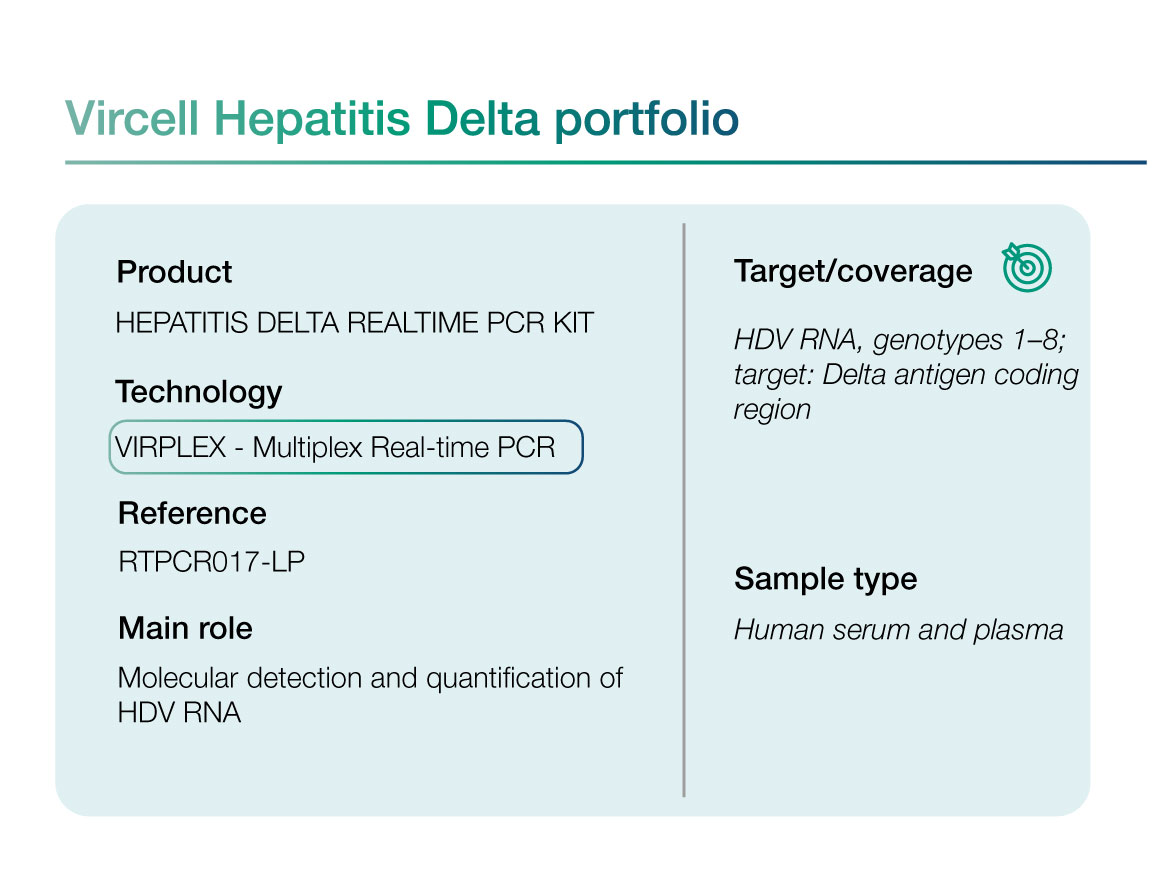
HEPATITIS DELTA REALTIME PCR KIT
HEPATITIS DELTA REALTIME PCR KIT is a real-time RT-PCR assay for the detection of nucleic acids from Hepatitis Delta virus in human serum and plasma samples.
The assay targets the gene coding for the Delta antigen and is designed to detect all known HDV genotypes, from 1 to 8. It includes quantification standards calibrated against the 1st WHO International Standard for Hepatitis D Virus for Nucleic Acid Amplification Techniques, supporting standardized HDV RNA quantification.
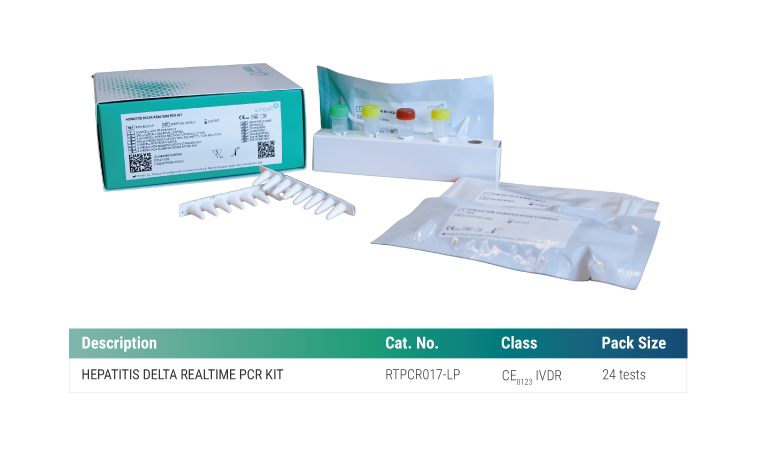
Key benefits of HEPATITIS DELTA REALTIME PCR KIT
Direct HDV RNA detection and quantification

Detects HDV RNA directly in human serum and plasma samples, supporting the confirmation of active Hepatitis Delta infection and enabling quantitative viral load assessment.
Standardized viral load reporting in IU/mL
Provides quantitative results in IU/mL, helping laboratories report HDV viral load in a standardized format and support follow-up workflows.
Broad HDV genotype coverage
Designed to detect HDV genotypes 1–8, covering all known Hepatitis Delta virus genotypes for reliable molecular detection.
WHO-traceable quantification
Includes four quantification standards calibrated against the WHO International Standard 7657/12, supporting comparability and standardized HDV RNA quantification.
Built-in workflow control
Includes an internal control to monitor amplification inhibition and assay setup, helping laboratories identify invalid or inconclusive results.
Optimized molecular workflow
The lyophilized master mix, pre-dispensed format, compatibility with 2-channel qRT-PCR thermocyclers and VIRCOM software support help streamline molecular laboratory workflows.
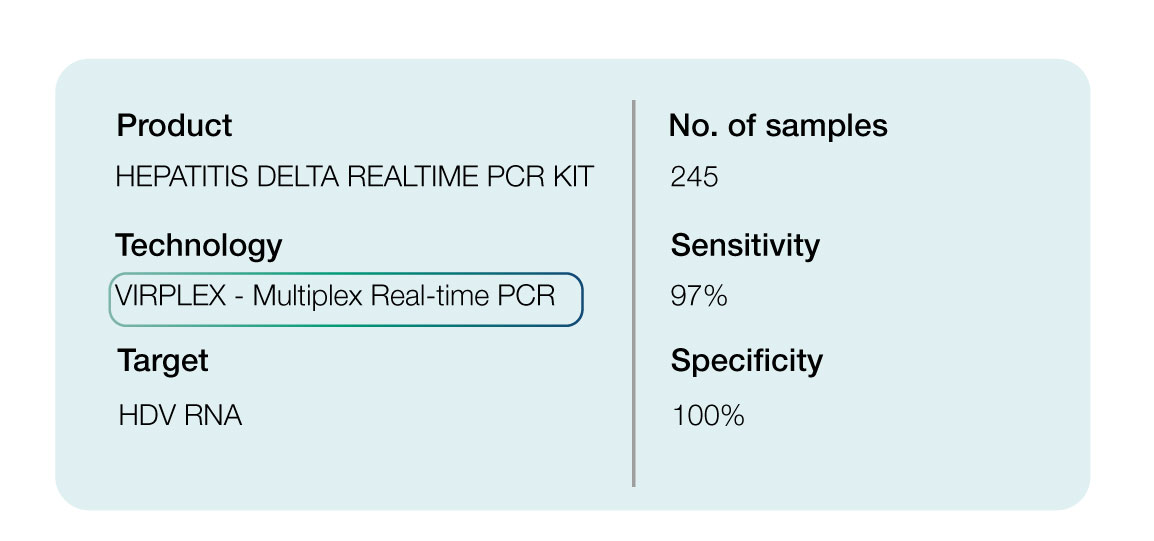
Summary performance

Summary performance
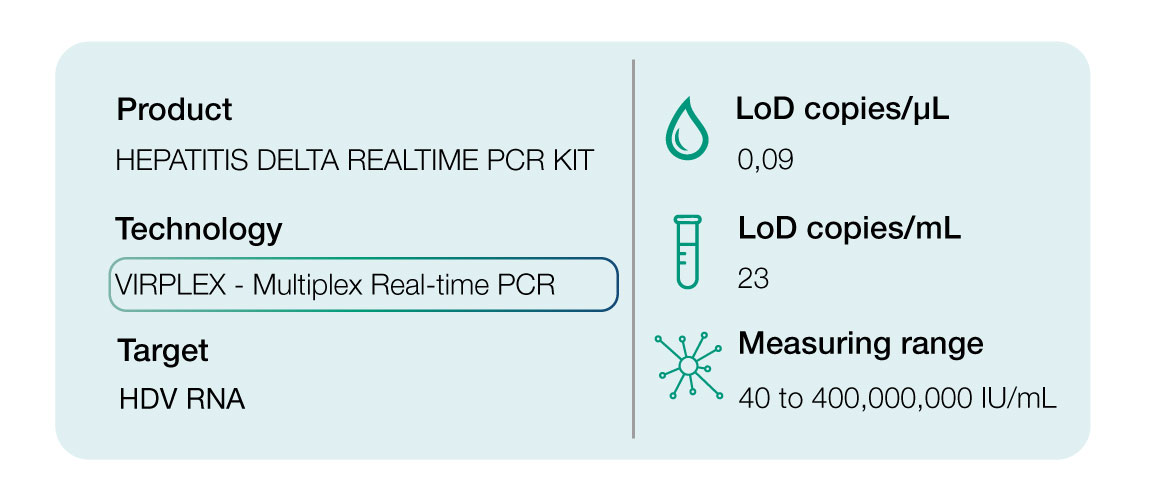
Analytical sensitivity

Analytical sensitivity
More resources
Bibliography
et al
Ir a enlacePromotional material
Need support with HDV RNA detection and quantification?
Vircell provides a real-time RT-PCR solution for hepatitis Delta virus RNA detection and quantification in serum and plasma, supporting standardized HDV molecular workflows.