
Background
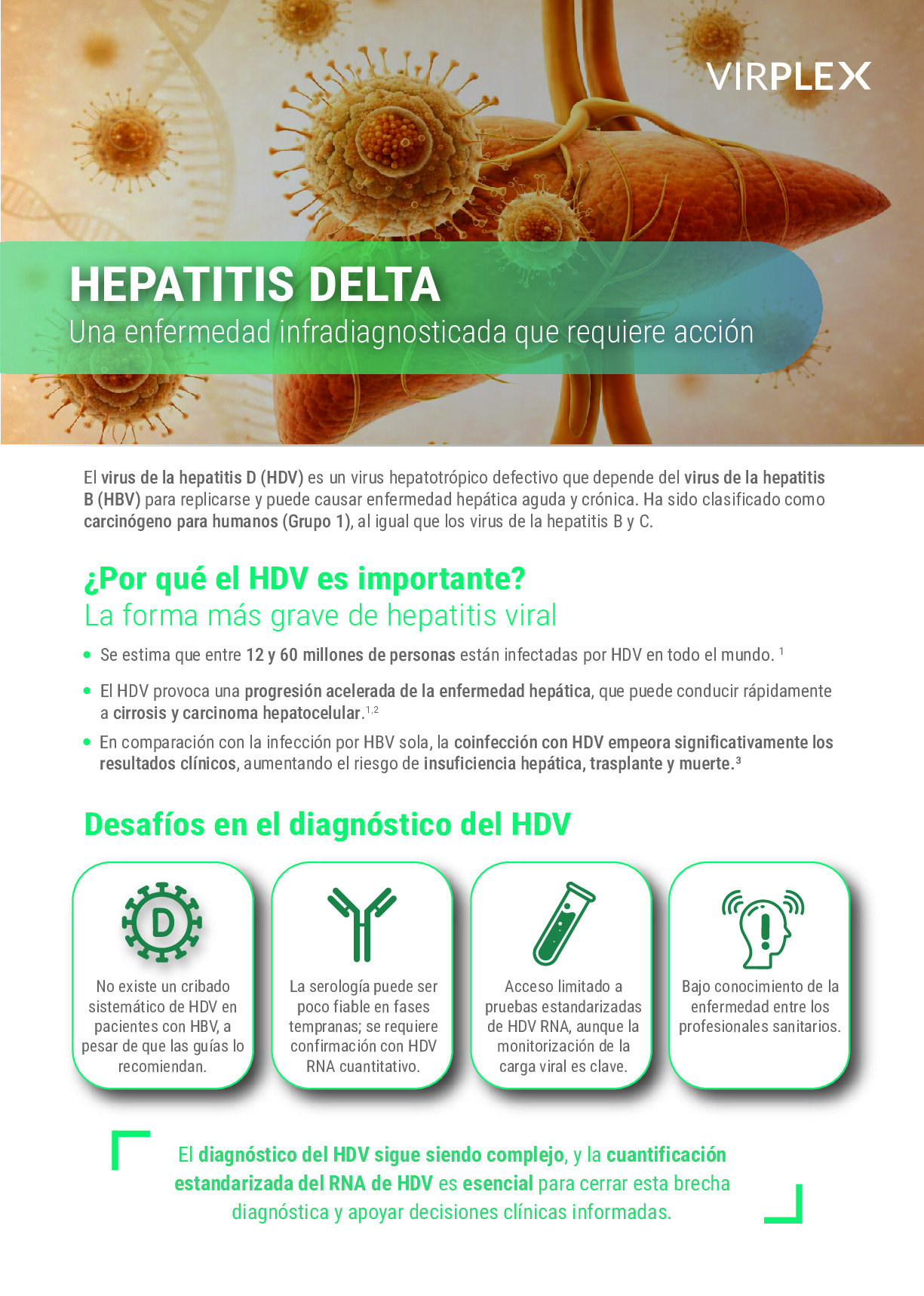
Hepatitis Delta virus (HDV) requires the presence of HBV infection and is considered the most severe form of chronic viral hepatitis. WHO estimates that HDV affects approximately 5% of people with chronic HBV infection, corresponding to around 12 million individuals worldwide.
HDV infection is associated with faster progression to cirrhosis, hepatocellular carcinoma, and liver-related mortality. Despite its clinical impact, HDV remains underdiagnosed and insufficiently characterized in many settings, partly due to the lack of systematic screening and follow-up programs.
Serological markers alone may not provide sufficient information on active viral replication. For this reason, HDV RNA quantification is becoming increasingly relevant for infection characterization, patient monitoring, and assessment of treatment response.
In addition, the emergence of new therapeutic options reinforces the need for reliable molecular tools that can be integrated into hepatology workflows.

Product information
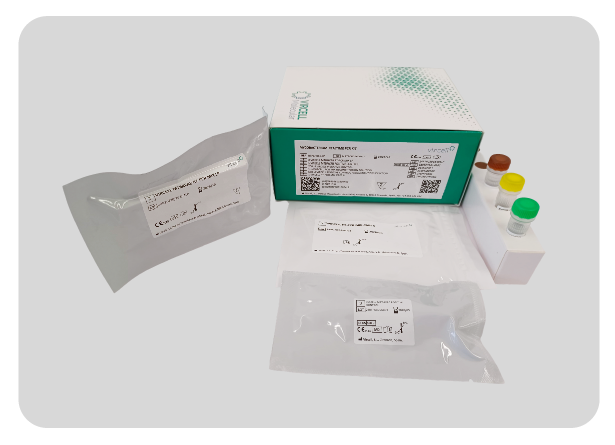
VIRPLEX Hepatitis Delta is a quantitative real-time PCR kit for HDV RNA.
It is aligned with the WHO standard, supporting standardized quantitative reporting.
The assay is designed for serum and plasma samples, fitting routine hepatology molecular workflows.
It uses a low volume of extracted sample, which is useful when sample material is limited or multiple tests are required.
VIRCOM software facilitates curve management and result calculation, helping streamline quantitative interpretation.
The kit is positioned for laboratories preparing for increased HDV monitoring needs. It provides a practical solution for laboratories that need quantitative information in a focused HDV workflow.
Diagnostic Recommendations
A positive HDV RNA result supports the presence of active HDV replication in the tested serum or plasma sample.
HDV RNA should be interpreted together with HBsAg status, anti-HDV results, HBV DNA, ALT, liver disease stage, treatment status and clinical history.
A positive result does not distinguish between HBV/HDV coinfection and HDV superinfection; this distinction requires interpretation together with HBV serology and the clinical context.
Quantitative HDV RNA results support viral load monitoring, but sequential follow-up should preferably be performed using the same assay and in the same laboratory to reduce inter-assay variability.
A negative HDV RNA result does not completely exclude HDV infection, especially if the viral load is below the limit of detection, HDV RNA is temporarily undetectable, the sample has not been handled correctly or amplification inhibition is present.
HDV RNA levels may fluctuate over time. Repeat testing may be useful when clinical suspicion persists or when confirming viral clearance.
Results below the measuring range should be considered positive but not quantifiable, and may require confirmation.
Results above the measuring range should be considered positive but not quantifiable; sample dilution and repeat testing may be required for accurate quantification.
Invalid or inconclusive results should be repeated, preferably after re-extracting RNA from the original sample. If internal control failure persists, collection of a new sample should be considered.
The assay detects HDV RNA and does not provide information on liver disease stage, fibrosis, infectivity, treatment response by itself or HBV replication status.
Sources
European Association for the Study of the Liver. EASL Clinical Practice Guidelines on hepatitis delta virus. J Hepatol. 2023;79(2):433-460. doi.org/10.1016/j.jhep.2023.05.001
World Health Organization. Guidelines for the prevention, diagnosis, care and treatment for people with chronic hepatitis B infection. Geneva: WHO; 2024. Available from: https://www.who.int/publications/i/item/9789240090903
PRODUCTS
HEPATITIS DELTA REALTIME PCR KIT
Analytes: Hepatitis D virus
MORE RESOURCES

Related germs and organisms categorized for this product line.

Downloadable PDF materials, brochures, and technical documents.

The latest insights, news, and research articles from our scientific team.

Understanding the complexity of vaginal infectionsVaginal infections are among the most frequent reasons for gynecological consultation, but their dia...

Beyond detection: H. pylori testing in today’s laboratory workflow
Helicobacter pylori remains a highly relevant target in gastrointestinal diagnostics. It is a familiar pathogen, but its clinical importance has not d...

Aspergillus galactomannan: a practical biomarker for invasive aspergillosis diagnosis
Invasive aspergillosis is still one of the most difficult fungal infections to diagnose early. It mainly affects patients with weakened immune systems...

Scientific bibliography and references related to this product.