



Understanding the complexity of vaginal infections
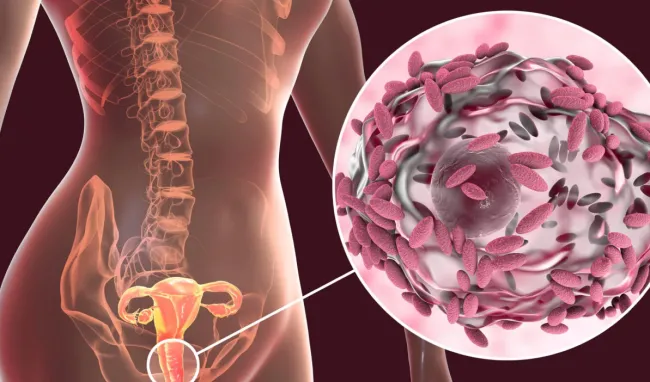
Vaginal infections are among the most frequent reasons for gynecological consultation, but their diagnosis is not always straightforward. Symptoms such as discharge, itching, irritation or discomfort can be caused by different conditions, and in many cases, more than one microorganism may be involved.
The most common infectious causes of vaginitis include bacterial vaginosis, vulvovaginal candidiasis and trichomoniasis. These conditions may appear individually or in combination, which makes interpretation more complex for clinicians and laboratories.
This is where molecular testing can add real value. By detecting multiple targets in the same workflow, molecular methods can help laboratories obtain a broader and more objective view of the vaginal microbiological profile.
Why polymicrobial vaginal infections are difficult to interpret
Bacterial vaginosis: a microbiome imbalance
Bacterial vaginosis, or BV, is not a classic infection caused by a single pathogen. It is better understood as an imbalance of the vaginal microbiome, where beneficial lactobacilli are reduced and anaerobic bacteria increase.
Microorganisms such as Gardnerella vaginalis, Atopobium vaginae / Fannyhessea vaginae and other bacterial species may be involved. Because BV reflects a change in microbial balance, interpretation can be more complex than a simple positive or negative result.
Candida vaginitis and species identification
Vulvovaginal candidiasis is another common cause of vaginal symptoms. Candida albicans is the most frequent species, but other species such as Candida glabrata or Candida krusei may also be relevant, especially because some non-albicans Candida species can be associated with reduced susceptibility or resistance to certain antifungal treatments.
For laboratories, the ability to detect and differentiate clinically relevant Candida species can support a more complete diagnostic approach.
Trichomoniasis and asymptomatic infection
Trichomonas vaginalis is a protozoan parasite and one of the most common non-viral sexually transmitted infections worldwide. A relevant challenge is that many infections may be asymptomatic, which can delay diagnosis and increase the risk of ongoing transmission.
In this context, molecular detection of Trichomonas vaginalis can support more sensitive and objective testing, especially when traditional methods are limited.
From traditional diagnosis to molecular testing
Traditional diagnostic approaches, such as Amsel criteria, Nugent score, microscopy or culture, continue to be used in many settings. However, they can be time-consuming, operator-dependent and affected by sample quality or subjective interpretation.
Molecular methods, including real-time PCR and other NAAT-based approaches, help laboratories move toward more standardized and reproducible workflows. They are particularly useful in cases where symptoms are unclear, when mixed infections are suspected or when different microorganisms need to be evaluated at the same time.
For polymicrobial vaginal infections, molecular testing can support:
- simultaneous detection of multiple targets
- more objective interpretation
- faster results compared with some traditional workflows
- improved standardization
- better support for complex or mixed microbial profiles
Still, molecular testing brings its own quality control needs. When several targets are included in one assay, the workflow becomes more complex, and laboratories need appropriate controls to monitor the process.
Why third-party controls matter in vaginal NAAT
Internal controls are useful, but they are not the whole picture
Most molecular assays include internal controls, which are essential to monitor specific aspects of the reaction. However, internal controls do not always fully challenge the entire workflow.
In vaginal molecular testing, laboratories may need to monitor not only amplification, but also sample preparation, extraction, target recovery, multiplex performance and lot-to-lot consistency.
This is why third-party controls are important. They provide an independent way to assess whether the molecular workflow is performing as expected.
Supporting confidence across the full workflow
A third-party control can help laboratories verify the analytical process beyond the kit’s internal control. This is especially relevant in multiplex vaginal panels, where several organisms may be detected at different concentrations and in different clinical profiles.
Independent controls can support:
- assay implementation
- workflow verification
- extraction and amplification monitoring
- performance assessment over time
- quality control in multiplex molecular testing
- confidence in routine diagnostic results
In short, a positive or negative result alone is not enough. Laboratories need confidence that the full process is working correctly.
AMPLIRUN® TOTAL VAGINAL PANEL CONTROL
AMPLIRUN® TOTAL VAGINAL PANEL CONTROL is designed to support molecular workflows for polymicrobial vaginal infections.
It includes complete, inactivated microorganisms in a matrix that mimics human vaginal swab samples, helping laboratories evaluate the workflow in a more representative way.
The control includes clinically relevant targets such as:
- Lactobacillus crispatus
- Candida albicans
- Atopobium vaginae / Fannyhessea vaginae
- Gardnerella vaginalis
- Trichomonas vaginalis
- Candida krusei
This composition allows laboratories to work with different simulated vaginal profiles, ranging from normal flora to mixed microbial patterns and bacterial vaginosis-associated profiles.
VAGINAL PANEL REALTIME PCR KIT
Vircell also offers VAGINAL PANEL REALTIME PCR KIT, a multiplex real-time PCR solution for the semi-quantitative detection of key microorganisms associated with vaginal infections in human vaginal swabs.
The panel supports the detection of targets associated with bacterial vaginosis, candidiasis and trichomoniasis, including:
- Gardnerella vaginalis
- Lactobacillus spp.
- Atopobium vaginae
- Trichomonas vaginalis
- Candida albicans
- Candida glabrata
- Candida krusei
- Candida parapsilosis / Candida tropicalis / Candida dubliniensis
Together, VAGINAL PANEL REALTIME PCR KIT and AMPLIRUN® TOTAL VAGINAL PANEL CONTROL support a more complete molecular approach: detection, interpretation support and independent workflow control.
Conclusion: better control for complex vaginal infection testing
Polymicrobial vaginal infections are not always easy to diagnose. Similar symptoms, mixed microbial profiles and microbiome imbalance can make interpretation challenging.
Molecular testing helps laboratories address this complexity by detecting multiple relevant targets in a more standardized way. But as molecular workflows become more complex, quality control becomes even more important.
Third-party controls provide an independent tool to support verification, monitoring and confidence in molecular testing. In this context, AMPLIRUN® TOTAL VAGINAL PANEL CONTROL helps laboratories strengthen their molecular quality control strategy for vaginal infection workflows.
For laboratories working with vaginal molecular diagnostics, the goal is not only to detect. It is to detect with confidence.







DO YOU HAVE ANY QUESTIONS?
Contact us