


Measles is one of those diseases many people think should already be under control. It is vaccine-preventable, well known to public health systems and supported by decades of surveillance experience.
And yet, measles remains one of the most contagious viral diseases. When immunity gaps appear, it can return quickly. A single imported case can be enough to start a transmission chain if it reaches a community with low vaccination coverage.
Recent activity in Europe and the Americas is a reminder that measles elimination cannot be taken for granted. Imported cases, local outbreaks, unvaccinated groups and people with unknown vaccination status can all create the right conditions for the virus to spread.
For public health teams, the response depends on vaccination, surveillance, case investigation and contact tracing. For laboratories, the role is just as important: suspected cases need to be confirmed quickly, so that clinical and public health decisions can be made without delay.
In this context, measles diagnosis is not just a technical step. It is part of outbreak preparedness.
Measles spreads fast and does not stop at borders
Measles can spread very easily when vaccination coverage is not high enough. Even countries that have eliminated endemic transmission can still face outbreaks when an imported case reaches a susceptible group.
That is why measles surveillance needs to be fast and coordinated. When a suspected case appears, public health teams need to:
- confirm infection early
- support isolation and infection control measures
- identify contacts at risk
- trace possible transmission chains
- distinguish imported cases from local transmission
- guide vaccination and outbreak response actions
CDC puts it clearly: measles anywhere is a threat everywhere. An unprotected traveller can become infected abroad and introduce the virus into a vulnerable community.
For laboratories, this means being ready to respond to suspected measles cases even when demand is irregular, unexpected or concentrated in short periods of time.
What surveillance is showing in Europe and the Americas
Surveillance data show that measles remains an active concern. In Europe, ECDC has reported that community spread continues to drive measles transmission, showing that protection is not equal across all countries, regions or population groups.
In the Americas, the situation has also raised concern. PAHO/WHO has reported increased measles activity in the region, with cases linked to importations, unvaccinated people and individuals with unknown vaccination status. The WHO update on measles in the Region of the Americas highlights the risk of reintroduction when immunity gaps remain.
The message is simple: measles does not need much opportunity to spread. It can travel with people, enter a susceptible community and begin circulating before the full scope of the outbreak is clear.
That is why measles surveillance, vaccination coverage and laboratory confirmation need to work together.
Why vaccination coverage still matters
Vaccination remains the most effective way to prevent measles. To interrupt transmission and reduce the risk of outbreaks, very high coverage with two vaccine doses is needed.
However, coverage gaps still exist. Some are linked to missed routine immunisation, access barriers, underserved communities or misinformation. Others are related to the long-term impact of disruptions in vaccination programmes.
WHO and UNICEF reported that global childhood immunization levels stalled in 2023, with first-dose measles vaccine coverage at around 83% and second-dose coverage at around 74%. These levels are below what is usually needed to prevent outbreaks reliably.
Outbreaks do not always begin in countries with low national coverage. They can also start in local pockets of susceptible people, even in areas that appear well protected overall.
This is why public health strategies continue to focus on closing immunity gaps, improving uptake of the MMR vaccine and strengthening surveillance. But when suspected cases appear, vaccination is only part of the response. At that point, laboratories become essential.
Why laboratories are key in measles outbreak response
During a measles outbreak, clinical suspicion is only the first step. Laboratory confirmation helps turn suspicion into action.
Reliable measles testing can support:
- case confirmation
- outbreak investigation
- contact tracing
- infection control decisions
- classification of imported or linked cases
- identification of transmission chains
- better-informed public health decisions
In real laboratory practice, samples do not always arrive at the ideal time. Some patients are tested early after symptom onset. Others are tested later. Vaccination history may be clear, unknown or incomplete. Sample type and testing objectives may also vary.
For this reason, measles diagnosis often relies on both molecular testing and serology.
RT-PCR and serology in measles diagnosis
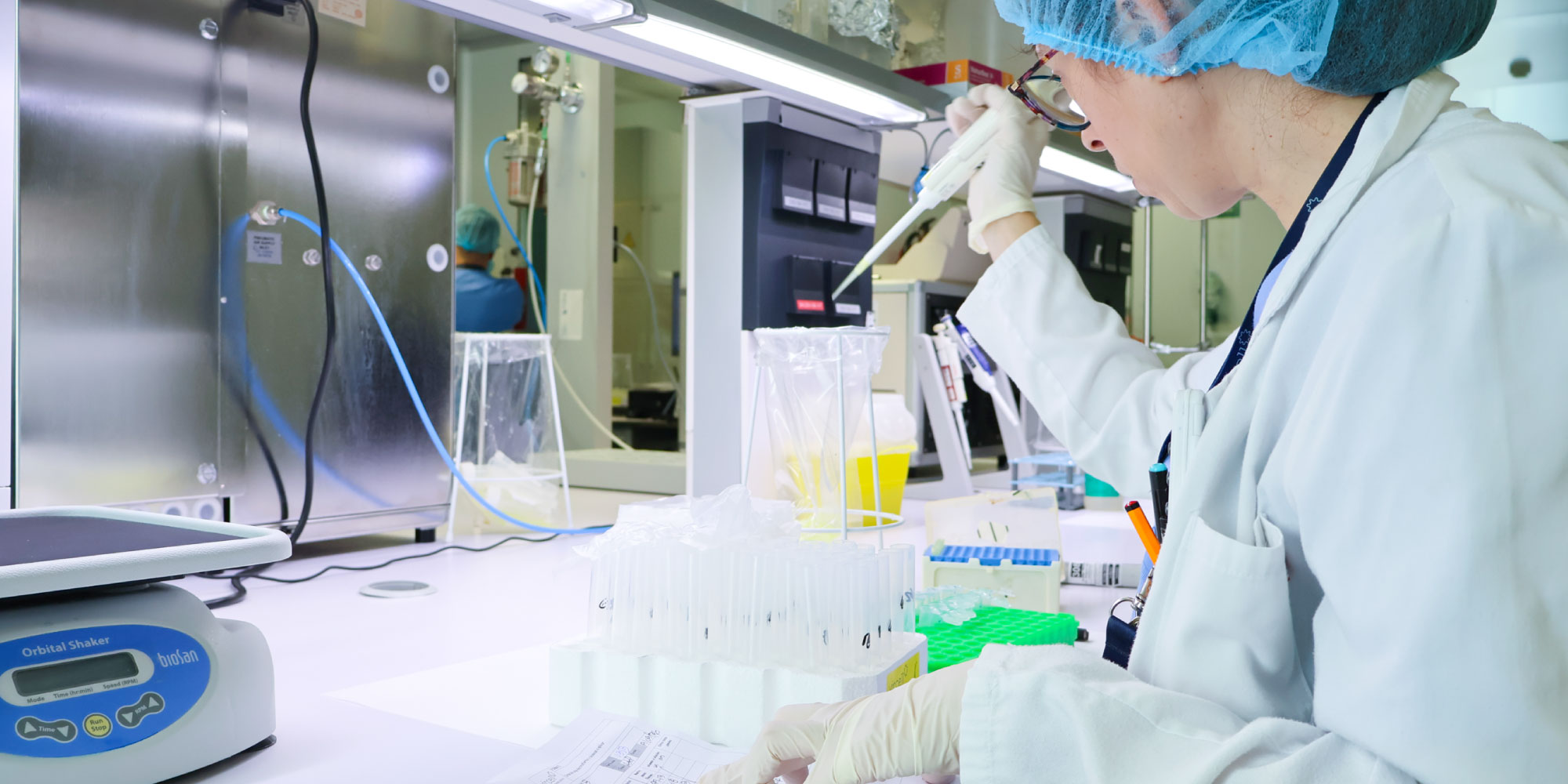
Real-time RT-PCR can detect measles virus RNA in clinical samples and is especially useful during the early stages of infection, when samples are collected soon after clinical suspicion.
CDC recommends collecting appropriate respiratory or urine samples, together with a blood specimen, from patients with clinical features compatible with measles. More information is available in the CDC laboratory testing guidance for measles.
WHO also describes the role of molecular methods in laboratory confirmation. Its laboratory manual for measles and rubella surveillance includes guidance and protocols for real-time RT-PCR.
At the same time, measles serology remains important. Detection of measles-specific IgM in serum can provide evidence of recent infection, while IgG testing can help assess immune response or support specific investigation contexts.
In real outbreak situations, one single method does not always answer every question. Some cases need early confirmation. Others require information about antibody response, immune status or exposure history.
A strong diagnostic strategy benefits from having both RT-PCR and serology available, interpreted within the clinical and epidemiological context.
Why serology still matters
Although RT-PCR is especially valuable for early confirmation, serology remains useful in measles investigations.
It can help laboratories and public health teams answer practical questions:
- Has the patient developed an antibody response?
- Is the result compatible with a recent infection?
- Can antibody information support the case investigation?
- What does the result suggest in relation to vaccination history or exposure?
This is particularly useful when suspected cases appear unexpectedly, when samples arrive at different times, or when laboratories need a flexible solution that fits routine work.
In these situations, a useful serology workflow should support on-demand testing, automated processing and clear interpretation without forcing laboratories to wait until enough samples are available for a batch.
MEASLES VIRCLIA®: flexible serology for measles workflows
At Vircell, we see the laboratory as a key part of community protection. Behind every measles case, there is a patient, a family and a transmission chain that may still be interrupted.
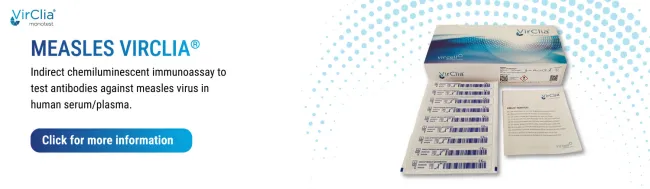
MEASLES VIRCLIA® is an indirect chemiluminescent immunoassay for the detection of antibodies against measles virus in human serum and plasma.
It is designed to support routine and on-demand workflows, helping laboratories manage individual samples or variable demand during surveillance, diagnostic confirmation and outbreak investigation.
Key workflow advantages include:
- monotest format with ready-to-use reagents
- simple, automated protocol
- fast results
- flexible setup of samples and reagents
- calibrator and negative control included in each monodose
- individual validation and interpretation for each sample
MEASLES VIRCLIA® can be processed within the VirClia® automated chemiluminescence platform, supporting more flexible infectious serology workflows. For laboratories that require continuous loading and random access, VirClia® Lotus offers automated CLIA workflow capabilities for infectious disease testing.
Vircell also offers complementary solutions for measles workflows, including MEASLES ELISA for ELISA-based serology workflows.
Conclusion
Measles remains a public health challenge because it is highly contagious, vaccine-preventable and able to return quickly when immunity gaps appear.
Recent activity in Europe and the Americas reinforces the need to maintain high vaccination coverage, strengthen surveillance and ensure laboratories are ready for suspected cases.
MEASLES VIRCLIA® supports measles serology workflows with an automated monotest solution for antibody detection in serum and plasma. Its design helps laboratories respond to both routine testing needs and outbreak-related demand.
In measles control, preparedness is not only about preventing outbreaks. It also means being ready to confirm, investigate and respond when new cases appear.


MORE PUBLICATIONS




DO YOU HAVE ANY QUESTIONS?
Contact us