
Background
Tularemia is a highly infectious zoonotic disease caused by Francisella tularensis. Although it is widely distributed across the Northern Hemisphere, its occurrence is uneven and its epidemiology varies considerably by region. The disease is considered endemic in large areas of North America and Eurasia, with particular relevance in Northern and Central Europe, Scandinavia, countries of the former Soviet Union, and Japan. Major outbreaks have also been reported in other countries, reflecting its continuing potential as a public health concern.
In humans, infection is not transmitted from person to person and is usually acquired through contact with infected wildlife, ingestion of or contact with contaminated water, bites from ticks and other arthropods, or inhalation of contaminated aerosols. The clinical presentation may vary depending on the route of exposure, infectious dose, and strain virulence, ranging from mild forms to severe infection. In this context, tularemia may be difficult to recognize in its early stages, making the availability of appropriate diagnostic tools especially important, particularly in endemic areas or in patients with a compatible exposure history.

Product features
VIRapid® TULAREMIA is the first commercial immunochromatographic test in the market for the qualitative detection of total antibodies against Francisella tularensis.
- Visual reading in just 15 minutes.
- No hazardous diagnosis.
- All reagents included in the kit.
- Product control line in each device.
- Based on LPS (conjugate and test line).
- Excellent performance: 99% sensitivity and 98% specificity.
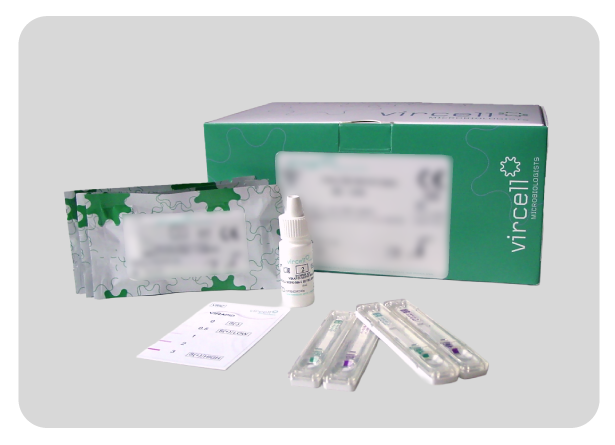
PRODUCTS
VIRAPID® TULAREMIA
Analytes: Francisella tularensis
MORE RESOURCES

Related germs and organisms categorized for this product line.

Downloadable PDF materials, brochures, and technical documents.


The latest insights, news, and research articles from our scientific team.

Understanding the complexity of vaginal infectionsVaginal infections are among the most frequent reasons for gynecological consultation, but their dia...
Beyond detection: H. pylori testing in today’s laboratory workflow
Helicobacter pylori remains a highly relevant target in gastrointestinal diagnostics. It is a familiar pathogen, but its clinical importance has not d...

Aspergillus galactomannan: a practical biomarker for invasive aspergillosis diagnosis
Invasive aspergillosis is still one of the most difficult fungal infections to diagnose early. It mainly affects patients with weakened immune systems...

Scientific bibliography and references related to this product.