
Complete daily serological testing
Hepatitis E virus (HEV) is one of the leading causes of acute viral hepatitis worldwide, with a steadily increasing incidence and a particularly significant clinical impact in pregnant women, immunocompromised individuals, and patients with underlying liver disease. Although HEV RNA detection is the reference method for diagnosis, serology remains the most widely used approach for initial screening. Anti-HEV IgM antibodies are indicative of acute infection, whereas Anti-HEV IgG antibodies are markers of past infection. IgG avidity testing helps distinguish recent infections (low avidity) from past infections (high avidity), improving the interpretation of serological results.
Product features
Chemiluminescent immunoassays (CLIA) to detect antibodies against hepatitis E virus and its avidity in human serum or plasma samples.
- Complete solution as an aid in the diagnosis of hepatitis E: HEV IgM, HEV IgG and HEV IgG avidity.
- Highly specific IgM immunocapture method.
- Quantification of IgG antibodies concentration using international units per milliliter (IU/ml) in accordance with the WHO standard. (no aplica a Toxo)
- First and only commercial avidity test as an aid in the diagnosis of acute hepatitis E infection.
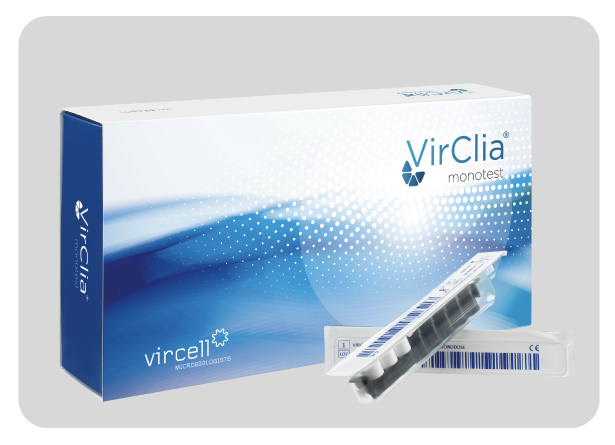
- Monotest format with ready-to-use reagents.
- Simple and automated protocol, with fast results.
- Customizable configuration of samples and reagents according to laboratory needs.
- Each monotest includes a calibrator and a negative control, enabling individual validation and interpretation of each sample.
- Use of primary tubes, with no need for manual pipetting.
Main recomendations for screening
- In patients with acute hepatitis or acute liver failure.
- In patients with known or newly diagnosed chronic liver disease who present with decompensation or signs of acute hepatic inflammation.
- In patients with chronic hepatitis of unknown cause or liver disease of uncertain origin, especially in cases of immunosuppression.
- In the transplant setting, particularly in organ donors and immunocompromised recipients, where HEV infection may become chronic.
EASL Clinical Practice Guidelines on Hepatitis E Virus Infection. Journal of Hepatology. 2018;68:1256–1271.
WHO. Hepatitis E – Fact sheet. World Health Organization.
ECDC. Hepatitis E – Annual Epidemiological Report. European Centre for Disease Prevention and Control.
PRODUCTS
HEPATITIS E VIRCLIA® IgG MONOTEST
Analytes: Hepatitis E virus
HEPATITIS E VIRCLIA® IgM MONOTEST
Analytes: Hepatitis E virus
HEPATITIS E VIRCLIA® IgG AVIDITY MONOTEST
Analytes: Hepatitis E virus
USED ON
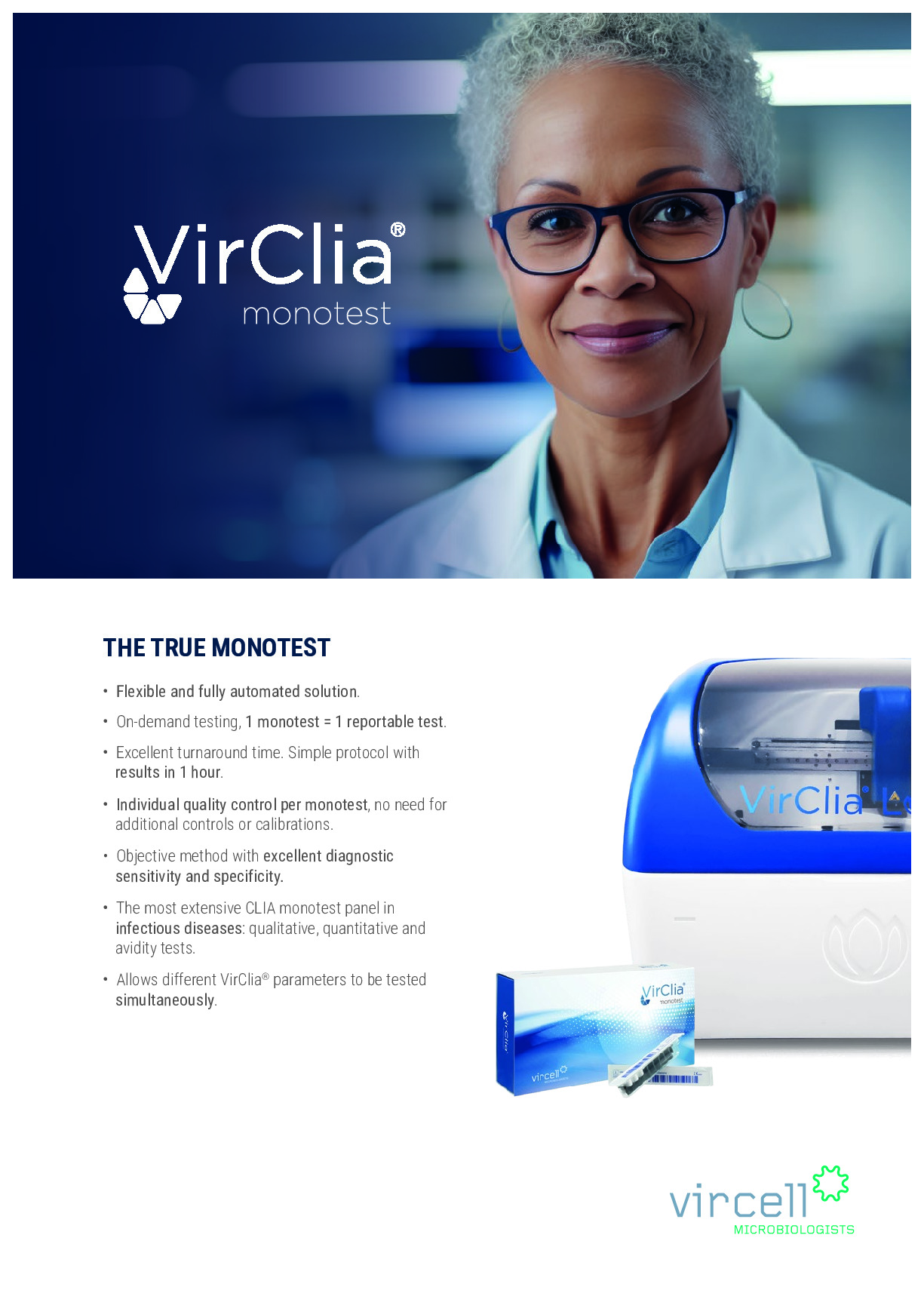
VIRCLIA® LOTUS

A compact automated CLIA platform for VirClia® infectious disease testing, combining ready-to-use single-test flexibility with continuous random access efficiency.
MORE RESOURCES

Related germs and organisms categorized for this product line.

Downloadable PDF materials, brochures, and technical documents.


The latest insights, news, and research articles from our scientific team.

Understanding the complexity of vaginal infectionsVaginal infections are among the most frequent reasons for gynecological consultation, but their dia...

Beyond detection: H. pylori testing in today’s laboratory workflow
Helicobacter pylori remains a highly relevant target in gastrointestinal diagnostics. It is a familiar pathogen, but its clinical importance has not d...

Aspergillus galactomannan: a practical biomarker for invasive aspergillosis diagnosis
Invasive aspergillosis is still one of the most difficult fungal infections to diagnose early. It mainly affects patients with weakened immune systems...

Scientific bibliography and references related to this product.