
Product features
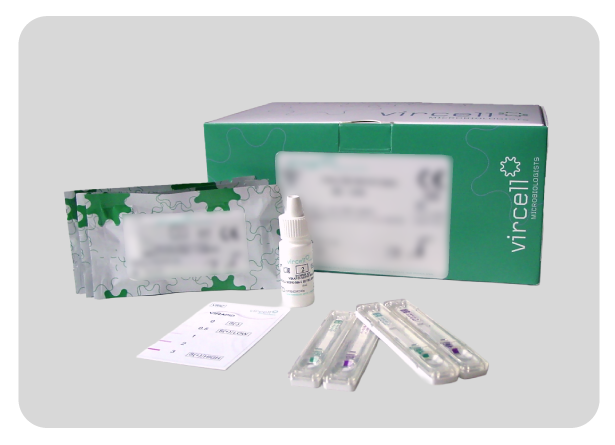
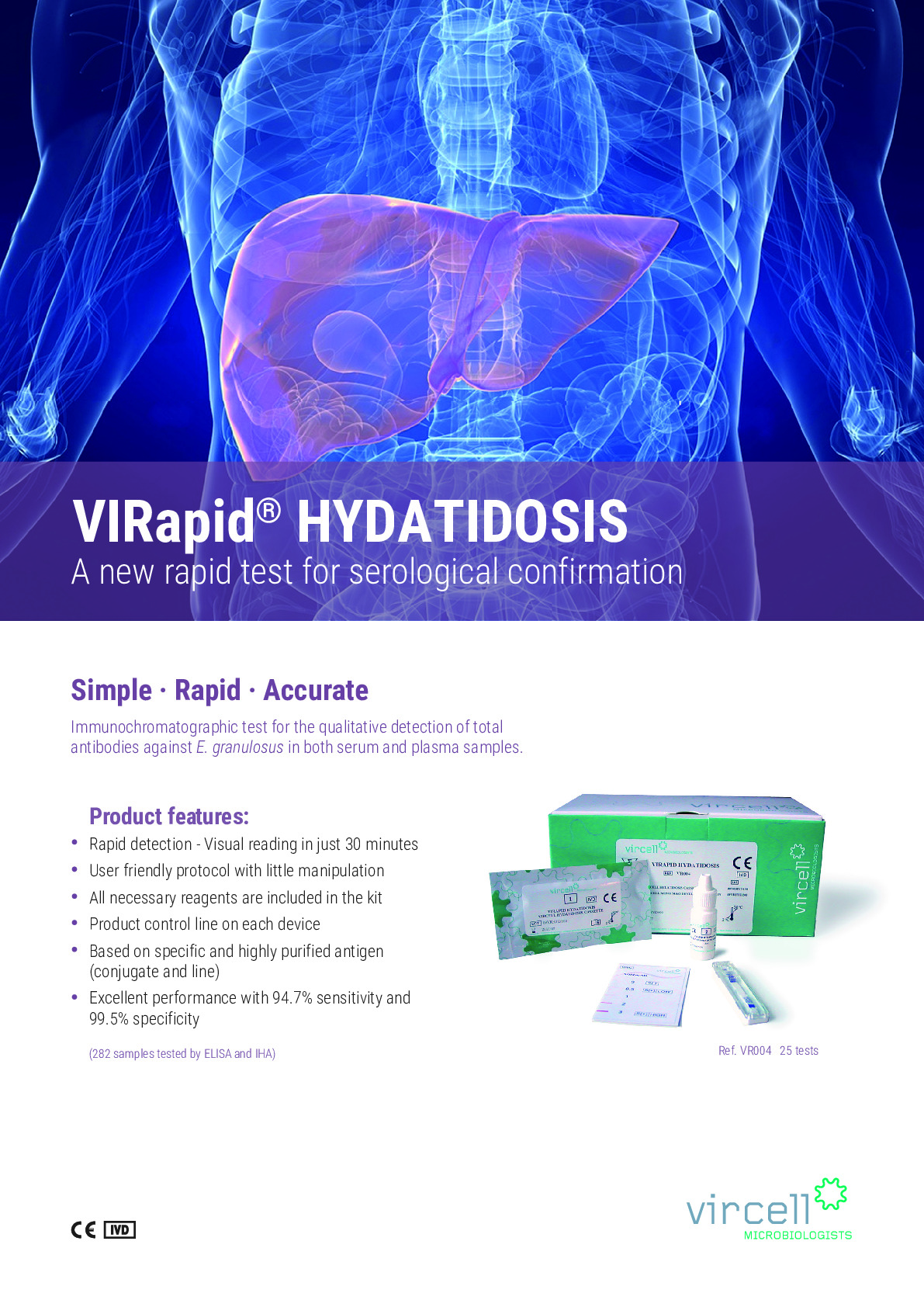
VIRapid® HYDATIDOSIS is the first immunochromatographic test in the market for hydatidosis detection and offers important benefits for both, big and small laboratories, in prevalent areas against the techniques currently used. A HPLC-purified E. granulosus 5/B enriched antigen is used to improve the specificity of the assay while keeping a high sensitivity.
Rapid detection - Visual reading in just 30 minutes
User friendly protocol with little manipulation
All necessary reagents are included in the kit
Product control line on each device
Based on specific and highly purified antigen (conjugate and line)
Excellent performance with 94.7% sensitivity and 99.5% specificity
Diagnostic recommendations
Imaging techniques such as ultrasound scan or X-ray are the tools usually used to diagnose hydatidosis. However, symptoms of hydatid cyst must be always confirmed by serological assay since it can be confused with other illnesses, including tumours. Cysts can be treated with chemotherapy while the treatment does not always give good results. Sometimes operation is required.
There is no specific standardized and highly sensitive serological test; so, in clinical practice the serological results depend on many factors such as quality of the antigen, technique employed, affected organ, number of hydatid cysts and variability of immune responses. Due to variable sensitivity of different tests, many laboratories usually carry out at least two different techniques for their routine diagnosis. Currently, serological confirmation is performed through a combination of several techniques. The most commonly used tests are enzyme-linked immunosorbent assays (IgG-ELISA), indirect hemagglutination (IHA) and latex agglutination (LAT).
PRODUCTS
VIRAPID® HYDATIDOSIS
Analytes: Echinococcus granulosus
MORE RESOURCES

Related germs and organisms categorized for this product line.

Downloadable PDF materials, brochures, and technical documents.

The latest insights, news, and research articles from our scientific team.

Understanding the complexity of vaginal infectionsVaginal infections are among the most frequent reasons for gynecological consultation, but their dia...

Beyond detection: H. pylori testing in today’s laboratory workflow
Helicobacter pylori remains a highly relevant target in gastrointestinal diagnostics. It is a familiar pathogen, but its clinical importance has not d...

Aspergillus galactomannan: a practical biomarker for invasive aspergillosis diagnosis
Invasive aspergillosis is still one of the most difficult fungal infections to diagnose early. It mainly affects patients with weakened immune systems...

Scientific bibliography and references related to this product.