
Background
Bartonella henselae and Bartonella quintana are two clinically relevant bacterial species associated with human disease. B. henselae is the main agent of cat scratch disease, a zoonotic infection usually linked to scratches or bites from cats, especially kittens. B. quintana, on the other hand, is the causative agent of trench fever and is mainly transmitted by the human body louse.
Both infections may present with non-specific manifestations and their epidemiology differs according to the species involved. Cat scratch disease occurs worldwide and is more frequently reported in children and young individuals exposed to cats, whereas trench fever is more commonly associated with vulnerable populations, overcrowding and poor hygienic conditions. In this context, serology plays an important role in supporting the diagnosis of Bartonella infections.
Product features
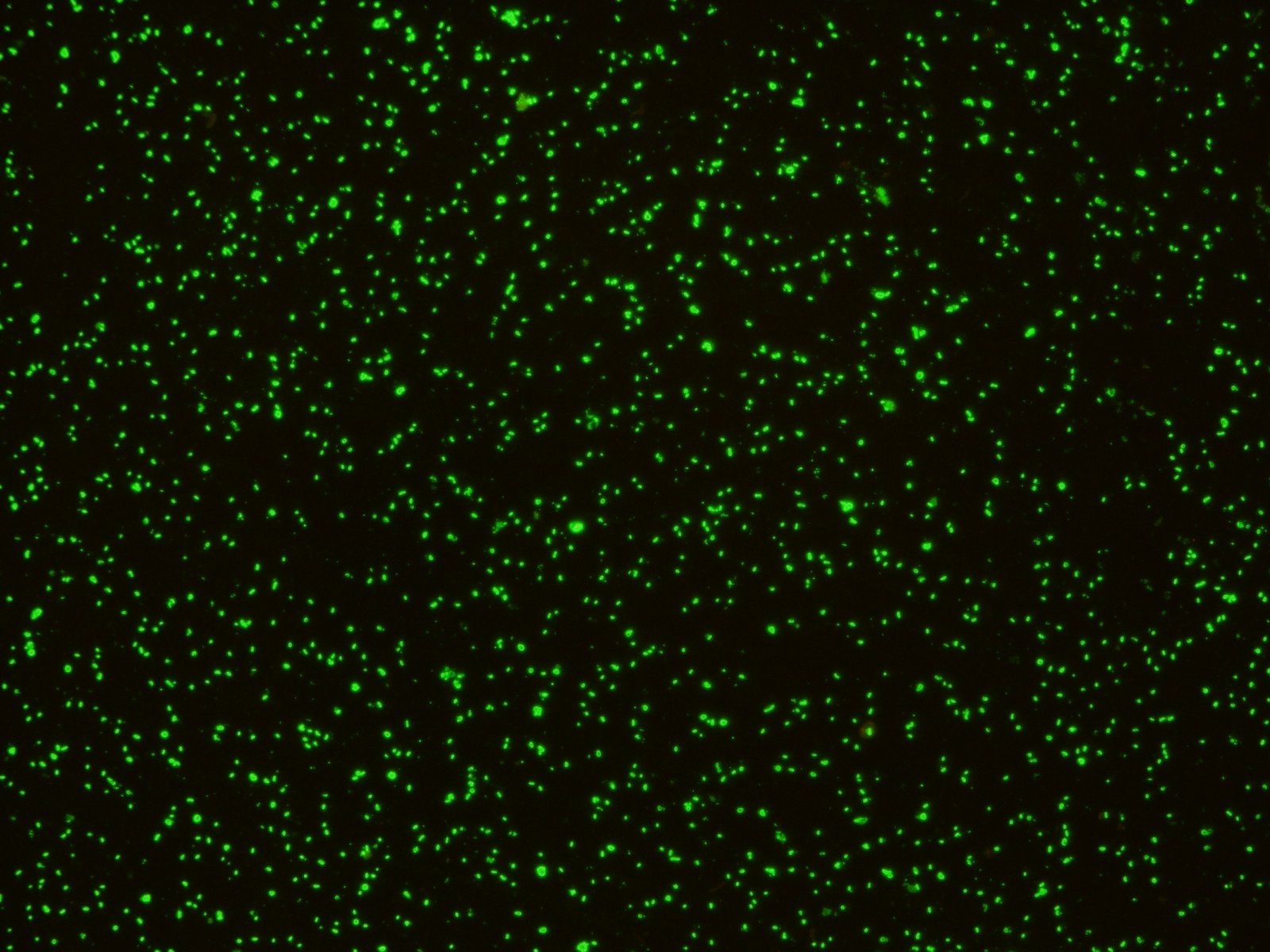
Immunofluorescence remains the reference technique for the serological diagnosis of certain parameters, such as Bartonella, Coxiella, Legionella, Chlamydia and Rickettsia. By allowing sample dilutions, it provides a quantitative value that can, in some cases, be very useful in guiding patient diagnosis.
It is a technique based on a very simple protocol, although it requires a certain level of experience in the reading and interpretation of results.
Complete panel including B. henselae and B. quintana in the same slide.
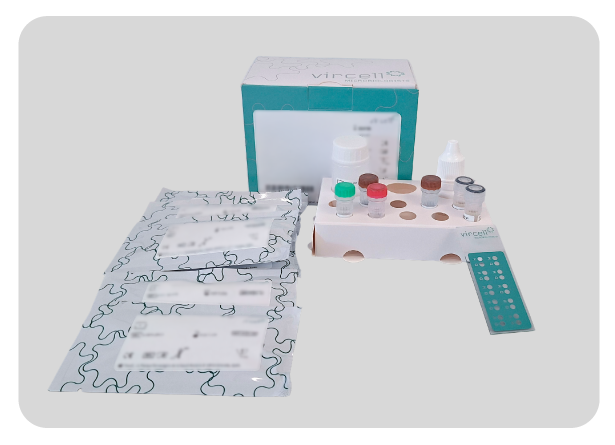
P- references include all the reagents required to perform the technique: slides, controls, PBS, mounting medium, conjugates, and sorbent when necessary. while S- references include slides only.
Separated-wells format facilitates the reading of results.
Recomendaciones diagnosticas
Results should always be interpreted together with clinical evaluation, epidemiological background, immune status, timing of sample collection and other diagnostic procedures.
Bartonella serology should not rely on a single result when recent infection is suspected. Paired acute and convalescent samples should be collected and tested in parallel whenever possible.
Samples collected very early in infection may not have detectable antibody levels. If clinical suspicion remains high, a second sample should be collected 14–21 days later to assess seroconversion or a significant antibody rise.
IgM may support recent infection, but it should be interpreted together with IgG results and clinical findings.
IgG titres may remain detectable after infection and do not always indicate active disease.
IFA titres of 1:64 to 1:256 are suggestive but not diagnostic of Bartonella infection. Titres of 1:512 with compatible clinical manifestations are strongly suggestive of disease.
Cross-reactivity between Bartonella henselae and Bartonella quintana has been reported. Positive results for both species may occur, and species orientation should consider the relative titres.
In the dual Bartonella henselae / Bartonella quintana IFA, one species should be considered predominant only when its titre is at least twice the titre observed for the other species.
A negative result in immunosuppressed patients does not always exclude infection, since antibody responses may be weak, delayed or absent.
Interferences or cross-reactivity may occur in some samples, including samples positive for antinuclear antibodies, rheumatoid factor, Coxiella burnetii, Brucella abortus or Chlamydophila pneumoniae, depending on the assay.
PRODUCTS
BARTONELLA HENSELAE & QUINTANA IFA IgG
Analytes: Bartonella, Bartonella quintana
BARTONELLA HENSELAE & QUINTANA IFA IgM
Analytes: Bartonella, Bartonella quintana
MORE RESOURCES

Related germs and organisms categorized for this product line.

Downloadable PDF materials, brochures, and technical documents.



The latest insights, news, and research articles from our scientific team.

Understanding the complexity of vaginal infectionsVaginal infections are among the most frequent reasons for gynecological consultation, but their dia...

Beyond detection: H. pylori testing in today’s laboratory workflow
Helicobacter pylori remains a highly relevant target in gastrointestinal diagnostics. It is a familiar pathogen, but its clinical importance has not d...

Aspergillus galactomannan: a practical biomarker for invasive aspergillosis diagnosis
Invasive aspergillosis is still one of the most difficult fungal infections to diagnose early. It mainly affects patients with weakened immune systems...

Scientific bibliography and references related to this product.