
Background
Sexually transmitted infections remain one of the most frequent infectious disease challenges worldwide. WHO estimates 374 million new infections every year among people aged 15–49 with one of four curable STIs: chlamydia, gonorrhoea, syphilis and trichomoniasis. This represents more than 1 million curable STIs acquired every day. In Europe, ECDC reports that bacterial STIs reached record levels in 2024, driven especially by gonorrhoea and syphilis. Clinical signs often overlap, and many infections may be asymptomatic or appear as mixed presentations. Antimicrobial resistance in Neisseria gonorrhoeae and Mycoplasma genitalium adds further complexity for laboratories. A structured molecular approach helps organize first-line testing and complementary investigation when the clinical picture is not fully explained.

Product Information
The VIRPLEX STI line combines complementary real-time PCR kits for different clinical scenarios.
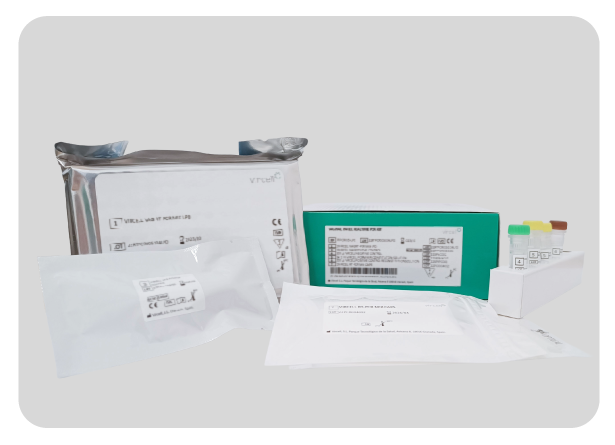
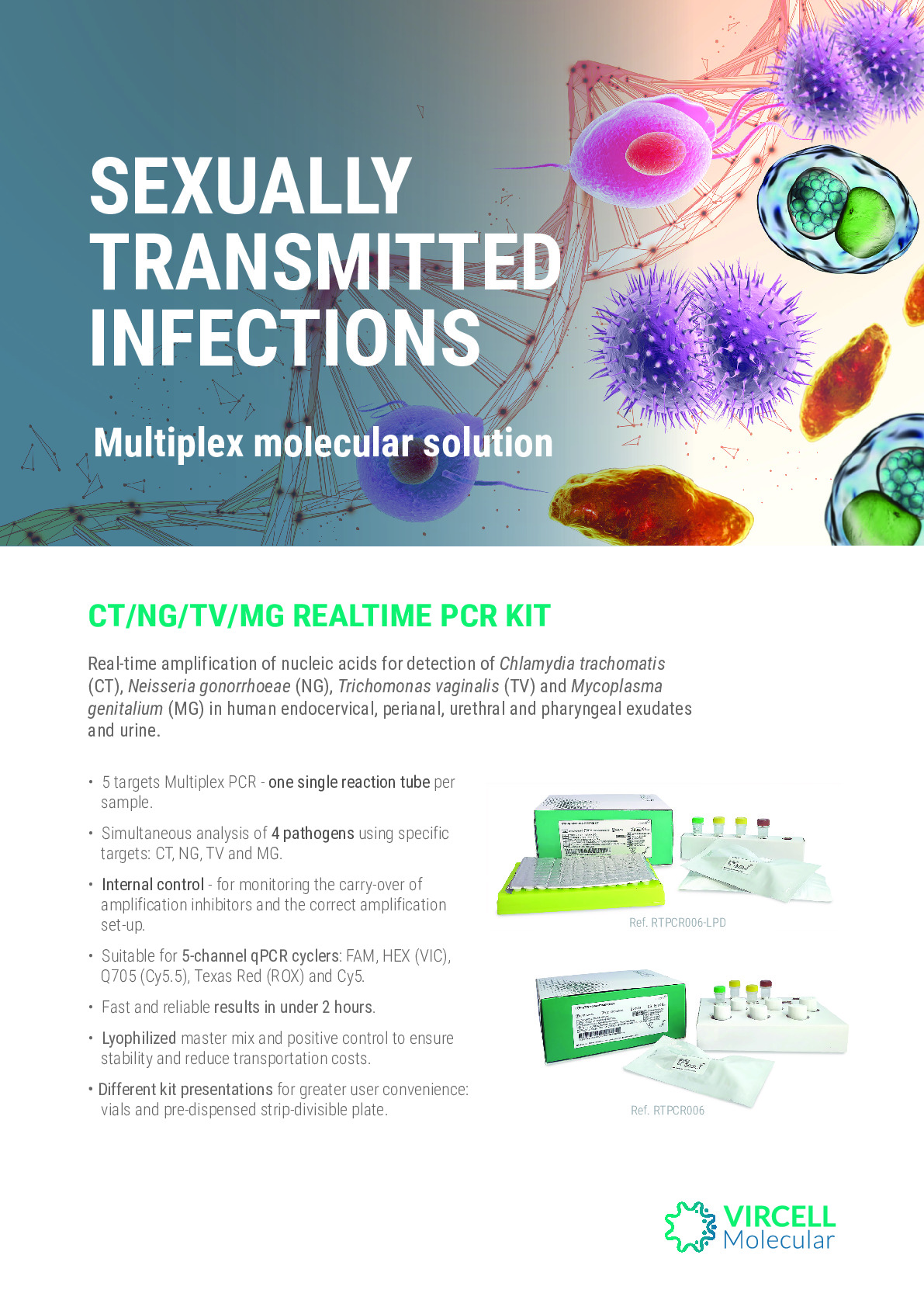
CT/NG/TV/MG covers four key agents in routine STI testing from a single workflow.
Genital Ulcer expands the approach to ulcerative lesions, including LGV, HSV-1, HSV-2, Treponema pallidum, Haemophilus ducreyi, VZV and mpox.
MH/UU/UP provides quantitative information for genital mycoplasmas, supporting interpretation when bacterial load is relevant.
Together, the panels can be combined into a single workflow, which is essential for laboratories seeking to expand their testing by obtaining targeted information on the main etiological groups while maintaining a manageable process. It allows for the organization of routine, supplemental, and outbreak-oriented testing.
Diagnostic recommendations
Molecular diagnosis of STIs
Results should be interpreted together with symptoms, sexual history, clinical findings, sample type and other diagnostic procedures.
A positive result indicates detection of the corresponding target in the sample, but does not by itself define clinical severity, microorganism viability, infectiousness or antimicrobial susceptibility.
A negative result does not exclude infection if the pathogen load is low, sample quality is suboptimal, the anatomical site sampled is not appropriate, amplification inhibitors are present or the causative agent is not included in the assay.
Co-infections may be detected. Each positive result should be interpreted according to the clinical syndrome and the microorganism identified.
For Neisseria gonorrhoeae, molecular detection does not provide information on antimicrobial susceptibility. Culture and susceptibility testing may be required in cases of suspected treatment failure or for resistance surveillance.
In the context of genital ulcer disease, detection of HSV-1, HSV-2, VZV, CT-LGV, T. pallidum, H. ducreyi or MPXV should be interpreted according to lesion type, anatomical location, time since onset and epidemiological context.
Detection of Mycoplasma genitalium is particularly relevant in persistent or recurrent urethritis, cervicitis or selected cases of pelvic inflammatory disease. Resistance testing should be considered when available.
Genital ulcer syndromes cannot be reliably diagnosed based on clinical appearance alone. Molecular detection in lesion samples supports etiological diagnosis, but should be interpreted together with lesion stage and epidemiological context.
A positive molecular result for Treponema pallidum supports detection in the lesion sample, but syphilis serology remains necessary for staging, follow-up and clinical management.
When mpox is suspected, material obtained from skin lesions is the preferred specimen type for molecular confirmation.
Mycoplasma hominis and Ureaplasma spp. may be part of the urogenital microbiota. Their isolated detection does not confirm disease and should not be used as the sole criterion for treatment decisions.
Detection of CT-LGV, T. pallidum, N. gonorrhoeae or MPXV may require specific clinical or public health actions according to local guidelines.
Detection of C. trachomatis serovar L / LGV should be interpreted according to sample type, clinical presentation and epidemiological risk factors, especially in rectal infections or workflows related to ulcerative lesions.
Invalid or inconclusive results should be repeated, preferably after re-extraction of nucleic acid from the original sample. If poor sample quality or inhibition is suspected, a new sample should be considered.
Sources
Workowski KA, Bachmann LH, Chan PA, Johnston CM, Muzny CA, Park I, et al. Sexually transmitted infections treatment guidelines, 2021. MMWR Recomm Rep. 2021;70(4):1-187. https://doi.org/10.15585/mmwr.rr7004a1
Jensen JS, Cusini M, Gomberg M, Moi H. 2021 European guideline on the management of Mycoplasma genitalium infections. J Eur Acad Dermatol Venereol. 2022;36(5):641-650. https://doi.org/10.1111/jdv.17972
Horner P, Donders G, Cusini M, Gomberg M, Jensen JS, Unemo M. Should we be testing for urogenital Mycoplasma hominis, Ureaplasma parvum and Ureaplasma urealyticum in men and women? A position statement from the European STI Guidelines Editorial Board. J Eur Acad Dermatol Venereol. 2018;32(11):1845-1851. https://doi.org/10.1111/jdv.15146
World Health Organization. Diagnostic testing and testing strategies for mpox: interim guidance. Geneva: WHO; 2024. Available from: https://www.who.int/publications/i/item/WHO-MPX-Laboratory-2024.1
PRODUCTS
CT/NG/TV/MG REALTIME PCR KIT
Analytes: Chlamydia trachomatis, Mycoplasma genitalium, Neisseria gonorrhoeae, Trichomonas vaginalis
GENITAL ULCER REALTIME PCR KIT
Analytes: Chlamydia trachomatis, Haemophilus ducreyi, Herpes simplex virus, Mpox virus, Treponema pallidum, Varicella-Zoster virus
MH/UU/UP REALTIME PCR KIT
Analytes: Mycoplasma hominis, Ureaplasma parvum, Ureaplasma urealyticum
MORE RESOURCES

Related germs and organisms categorized for this product line.

Downloadable PDF materials, brochures, and technical documents.

The latest insights, news, and research articles from our scientific team.

Understanding the complexity of vaginal infectionsVaginal infections are among the most frequent reasons for gynecological consultation, but their dia...

Beyond detection: H. pylori testing in today’s laboratory workflow
Helicobacter pylori remains a highly relevant target in gastrointestinal diagnostics. It is a familiar pathogen, but its clinical importance has not d...

Aspergillus galactomannan: a practical biomarker for invasive aspergillosis diagnosis
Invasive aspergillosis is still one of the most difficult fungal infections to diagnose early. It mainly affects patients with weakened immune systems...

Scientific bibliography and references related to this product.