
Background
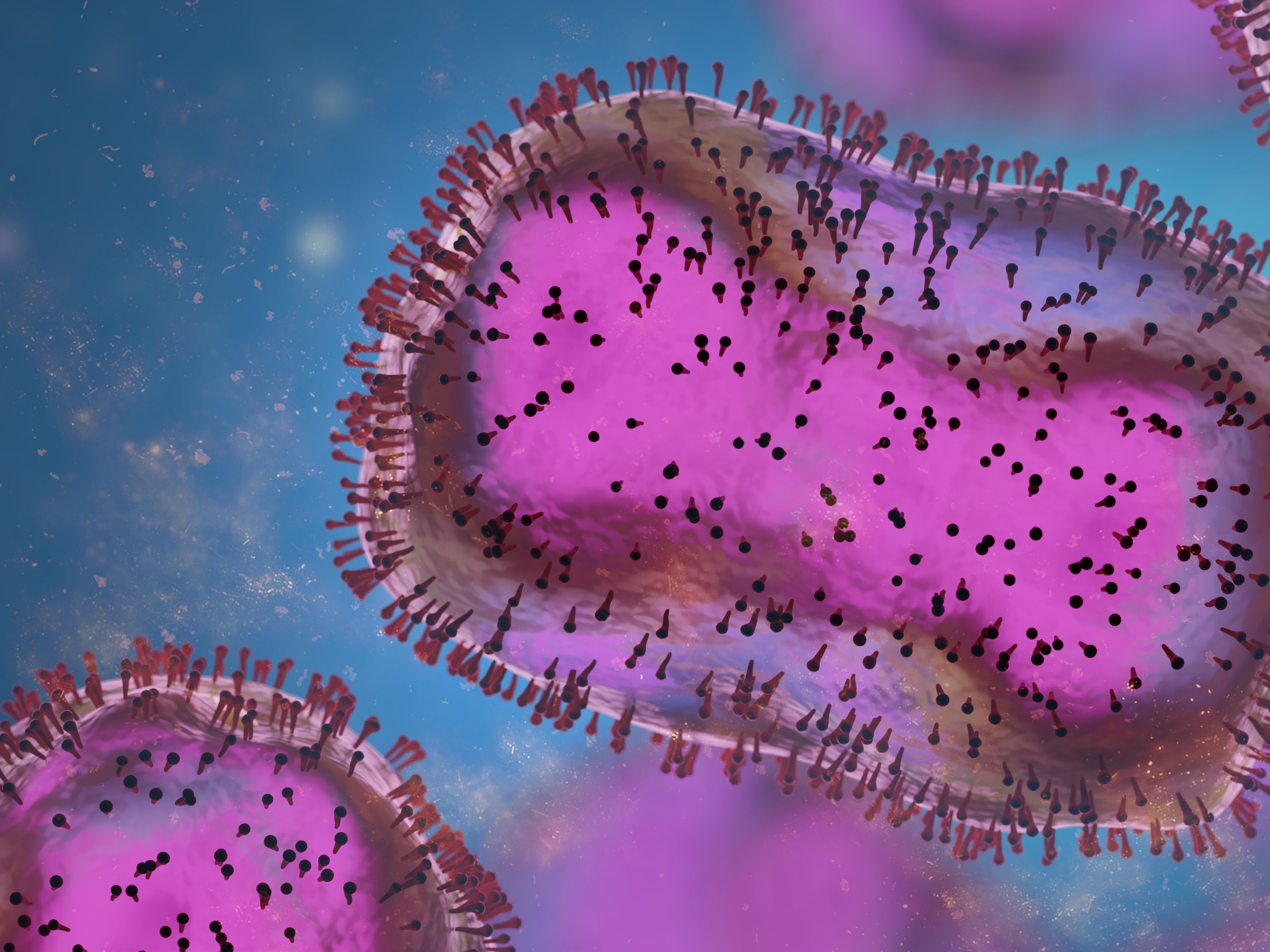
Mpox is a zoonotic disease caused by Monkeypox virus, a double-stranded DNA virus belonging to the Orthopoxvirus genus. Infection may present with fever, lymphadenopathy, mucosal lesions and a characteristic rash that can evolve through macules, papules, vesicles, pustules and crusts.
Clinical presentation may overlap with other infectious or dermatological conditions, including varicella-zoster virus, herpes simplex virus, syphilis, bacterial skin infections and other causes of vesicular or ulcerative lesions. Laboratory confirmation is therefore important to support patient management, infection control and public health response.
Real-time PCR on lesion material is the preferred diagnostic approach for confirmation of mpox. Detection of Monkeypox virus-specific targets, generic Orthopoxvirus targets and, when required, clade-specific targets can support both diagnostic and epidemiological workflows.
Product information
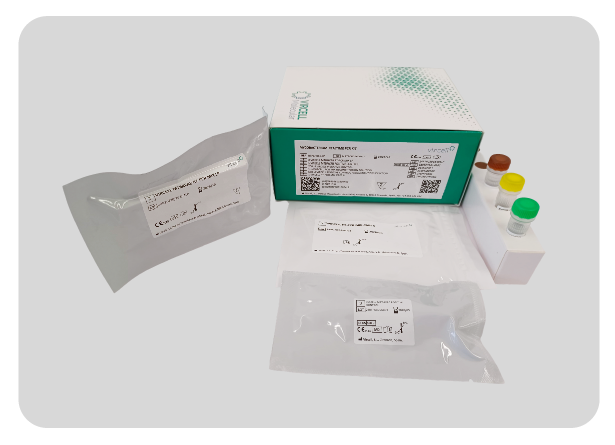
The MONKEYPOX REAL-TIME PCR and MPOX CLADES REAL-TIME PCR kits are multiplex real-time PCR assays for the detection of monkeypox virus nucleic acids and their classification into clade I or clade II in samples from human skin lesions.
Main features:
- Multiplex real-time PCR.
- MPXV detection and clade I/clade II classification.
- One single reaction tube per sample.
- Human RNase P internal control.
- Lyophilized master mix and positive control.
- Suitable for FAM/HEX-VIC/Texas-ROX/Cy5 qPCR cyclers.
- Designed for human skin lesion sample workflows.
- 24-test format.
The assay does not distinguish between subclades. Clade I includes subclades Ia and Ib, and clade II includes subclades IIa and IIb, which facilitates diagnostic and epidemiological workflows.
Diagnostic Recommendations
- A positive result for MPXV DNA in material from a skin or mucosal lesion supports molecular confirmation of mpox in a compatible clinical and epidemiological context. PCR/NAAT testing of lesion material is the recommended method for diagnostic confirmation.
- The decision to perform testing should be based on clinical and epidemiological suspicion. Skin manifestations may overlap with other rash or ulcerative diseases, so clinical presentation alone does not always allow mpox to be differentiated.
- Lesion material is the preferred specimen type for molecular diagnosis. An adequate sample should be collected from lesions, preferably from different locations or with different appearances, following the requirements of the receiving laboratory.
- Molecular assays may target MPXV-specific targets or generic Orthopoxvirus targets. Detection based only on a generic Orthopoxvirus PCR may require MPXV-specific confirmation, especially in settings where other Orthopoxviruses may circulate.
- Clade determination using specific NAAT or sequencing may support epidemiological interpretation and surveillance. The ability to differentiate clades or subclades depends on the assay design and the local confirmation algorithm.
- A negative result does not completely exclude mpox if the sample is of poor quality, collected at an inappropriate time, handled or transported incorrectly, the viral load is below the limit of detection, extraction/amplification failure occurs, or the molecular target is affected by genetic variation.
- If clinical suspicion persists, repeat testing with a new lesion sample or complementary testing according to the local algorithm may be required. WHO indicates that alternative specimens may have lower sensitivity and that, if lesions appear, testing should be repeated using lesion material.
- Molecular detection identifies viral DNA, but does not by itself demonstrate viral viability, infectiousness, clinical severity or treatment response. Interpretation should be integrated with clinical evolution, immune status, lesion location and epidemiological context.
- Invalid, inconclusive or discordant results should be repeated according to the laboratory procedure, preferably after re-extraction or using a new sample when inhibition, extraction failure or insufficient sample quality is suspected.
Sources
- World Health Organization. Diagnostic testing and testing strategies for mpox: interim guidance. Geneva: World Health Organization; 2024 [consulted 2026 Jul 3]. Available from: https://www.who.int/publications/i/item/B09166
- Centers for Disease Control and Prevention. Collecting and handling specimens for Monkeypox PCR testing. Atlanta: CDC; 2026 [consulted 2026 Jul 3]. Available from: https://www.cdc.gov/monkeypox/hcp/diagnosis-testing/collecting-specimens.html
- European Centre for Disease Prevention and Control. Factsheet for health professionals on mpox. Stockholm: ECDC; [consulted 2026 Jul 3]. Available from: https://www.ecdc.europa.eu/en/all-topics-z/monkeypox/factsheet-health-professionals
PRODUCTS
MONKEYPOX REALTIME PCR KIT
MPOX CLADES REALTIME PCR KIT
MORE RESOURCES

The latest insights, news, and research articles from our scientific team.

Understanding the complexity of vaginal infectionsVaginal infections are among the most frequent reasons for gynecological consultation, but their dia...

Beyond detection: H. pylori testing in today’s laboratory workflow
Helicobacter pylori remains a highly relevant target in gastrointestinal diagnostics. It is a familiar pathogen, but its clinical importance has not d...

Aspergillus galactomannan: a practical biomarker for invasive aspergillosis diagnosis
Invasive aspergillosis is still one of the most difficult fungal infections to diagnose early. It mainly affects patients with weakened immune systems...